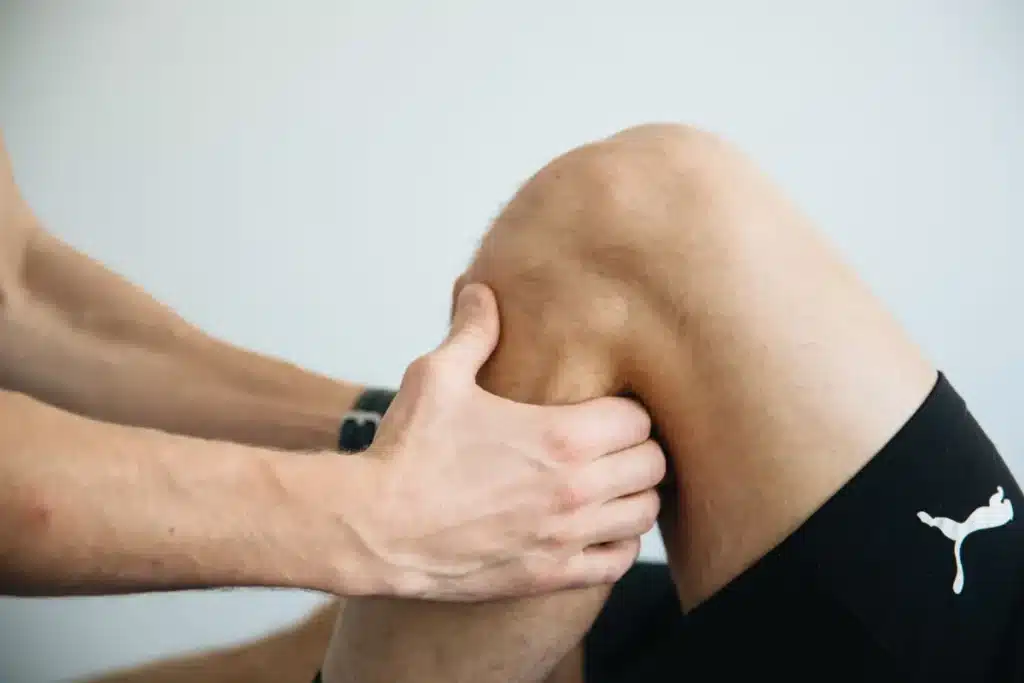

If you’re living with ongoing pain, scheduling your first Pain Management appointment can feel like stepping into the unknown. You may wonder what questions will be asked, what tests will be done, and whether you’ll finally get clear answers. The good news is that a first Pain Management visit is designed to be thorough, structured, and focused on understanding you as a whole person, not just a symptom. Clinics such as the Spine and Pain Clinic of Texas follow a step-by-step process to evaluate pain carefully and develop an informed plan of care.
This article explains exactly what happens during your first Pain Management appointment, from preparation to follow-up planning, so you know what to expect and why each step matters.
Understanding Pain Management and Why the First Visit Matters
Pain Management is a specialized medical field dedicated to diagnosing and treating pain while improving physical function and quality of life. It is invaluable for people whose pain has lasted longer than expected or has not responded to basic treatments.
What Pain Management Actually Treats
Pain Management addresses a wide range of conditions, including back pain, neck pain, joint pain, nerve pain, post-surgical pain, arthritis, and chronic musculoskeletal disorders. Rather than focusing only on where pain is felt, Pain Management providers look for the underlying cause and contributing factors.
The Goals of a First Appointment
The first appointment is about building a complete picture of your pain. The goal is to understand your medical history, how pain affects your daily life, and what treatments you’ve already tried. This information enables targeted, effective decisions about future care.
Preparing Before Your Pain Management Appointment
Being prepared can make your appointment more productive and efficient.
Medical Records and Imaging
If you have previous imaging such as MRIs, CT scans, or X-rays, these are extremely valuable. They help your provider see structural changes, nerve involvement, or joint problems that may be contributing to your pain.
Medication and Treatment History
Your provider will ask about medications, injections, physical therapy, surgeries, or other treatments you’ve tried. Knowing what worked, what didn’t, and what caused side effects helps avoid unnecessary repetition.
Writing Down Your Symptoms
Pain can be hard to explain in the moment. Writing down details such as when it started, what makes it better or worse, and how it affects sleep or work can help ensure nothing important is overlooked.
For More information, visit What Does a Pain Management Doctor Do for Chronic Pain Conditions?
Step 1: Check-In and Initial Intake
Your visit begins with an intake process that gathers essential background information.
Administrative Paperwork
Clinics such as the Spine and Pain Clinic of Texas use intake forms to document medical history, prior diagnoses, and current concerns.
Insurance and Medical History Forms
These forms typically include past surgeries, chronic conditions, allergies, and current medications to support safe and coordinated care.
Pain Assessment Questionnaires
You may be asked to rate your pain and describe how it limits daily activities. These assessments help establish a baseline for tracking progress over time.
Step 2: Comprehensive Medical Interview
The medical interview is one of the most essential parts of your first Pain Management Plano appointment.
Discussing Your Pain Story
Your provider will ask detailed questions about your pain history, listening carefully to how and when it developed.
Location, Duration, and Severity of Pain
Where the pain is located, whether it travels, how long it has been present, and how intense it feels all provide important diagnostic clues.
Lifestyle and Daily Function Questions
You may be asked about sleep, work duties, physical activity, and stress. These factors often influence how pain behaves and how it should be treated.
Step 3: Physical Examination
The physical exam helps your provider understand how pain affects movement and function.
Movement and Mobility Testing
You may be asked to bend, twist, walk, or raise your arms or legs. These movements reveal limitations, stiffness, and pain triggers.
Neurological and Sensory Checks
Reflexes, muscle strength, and sensation tests help determine whether nerves are involved and how well they are functioning.
Step 4: Review of Imaging and Diagnostic Tests
Diagnostic tests provide visual confirmation of the cause of pain.
X-rays, MRIs, and CT Scans
These images can show disc problems, arthritis, spinal narrowing, inflammation, or nerve compression. Reviewing them alongside your symptoms helps refine the diagnosis.
When Additional Tests Are Needed
If current imaging is outdated or incomplete, additional tests such as updated scans or nerve studies may be recommended.
Step 5: Diagnosis and Pain Source Identification
Pain often has more than one contributing cause, especially when it has lasted a long time.
Acute vs Chronic Pain
Acute pain usually follows injury or surgery and improves with healing. Chronic pain persists beyond normal healing time and may involve changes in how the nervous system processes pain.
Identifying Contributing Factors
Posture, muscle imbalances, inflammation, prior injuries, and stress can all play a role. Pain Management considers how these factors interact.
Step 6: Creating a Personalized Pain Management Plan
After the evaluation, your provider develops a treatment plan tailored to your needs.
Interventional Treatment Options
Some patients benefit from targeted procedures.
Injections and Minimally Invasive Procedures
Examples include epidural steroid injections, joint injections, nerve blocks, or radiofrequency treatments, selected based on diagnosis and goals.
Non-Interventional Therapies
Pain Management includes more than procedures.
Physical Therapy and Behavioral Approaches
Physical therapy improves strength and mobility, while behavioral strategies help manage the emotional and psychological impact of pain.
Medication Strategies
Medications may be recommended to reduce inflammation, calm nerve pain, or improve daily function, with careful consideration of risks and benefits.
Step 7: Patient Education and Expectations
Education helps patients actively participate in their care.
Setting Realistic Pain Relief Goals
Pain improvement is often gradual. The focus is on better function, increased activity, and improved quality of life.
Understanding Risks and Benefits
Your provider explains treatment options clearly so you can make informed decisions.
Step 8: Next Steps and Follow-Up Planning
Pain Management is an ongoing process, not a single visit.
- Scheduling Treatments
If treatments are recommended, timing and preparation are discussed.
- Ongoing Monitoring and Adjustments
- Follow-up visits allow the plan to be refined based on how your body responds.
Common Emotions During a First Pain Management Visit
Feeling nervous, hopeful, or uncertain is normal. Many patients feel reassured after being heard and having a clear plan moving forward.
Why a Structured Pain Management Approach Matters
A step-by-step approach allows providers to treat pain safely and effectively. Clinics such as the Spine and Pain Clinic of Texas emphasize thorough evaluation and individualized care to support better long-term outcomes.
Final Thoughts on Your First Pain Management Appointment
Your first Pain Management appointment in Plano is about understanding your pain and creating a path forward. With careful evaluation, open communication, and a personalized plan, Pain Management can help turn persistent pain into a condition that is better understood and more manageable.
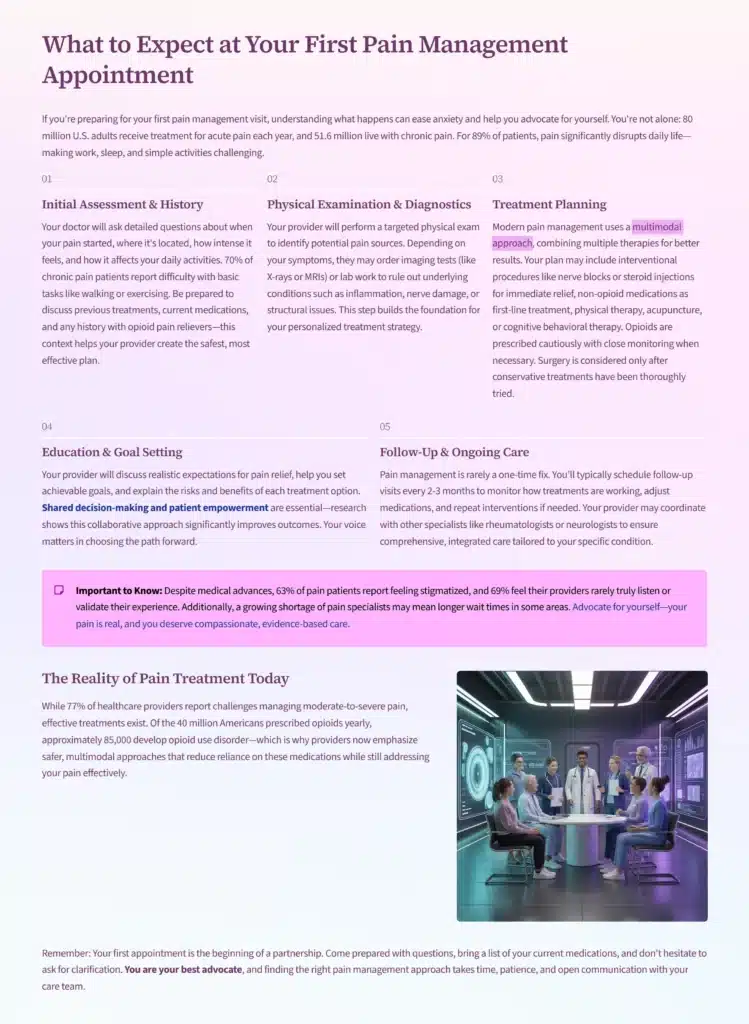
What Happens at Your First Pain Management Appointment: Step by Step (USA Data 2025)
- Context:
- Eighty million U.S. adults receive treatment for acute pain annually; 51.6 million experience chronic pain (CDC 2023).
- Pain disrupts daily life for 89% of patients; 77% of providers report challenges managing moderate-to-severe pain (Vertex 2025).
- Step 1: Initial Assessment & History
- Detailed discussion of pain onset, location, intensity, and impact on daily activities (70% report difficulty walking/exercising).
- Review of prior treatments, medications, and any opioid use (40 million prescribed opioids yearly; 85,000 develop opioid use disorder).
- Step 2: Physical Examination & Diagnostics
- Targeted physical exam to identify pain sources; may include imaging or lab tests to rule out underlying conditions.
- Step 3: Treatment Planning
- Multimodal approach combining:
- Interventional therapies (e.g., nerve or steroid injections) often provide immediate relief.
- Medications: non-opioid first-line; opioids used cautiously with close monitoring.
- Complementary therapies: physical therapy, acupuncture, and cognitive behavioral therapy.
- Surgery is considered only if conservative treatments fail.
- Multimodal approach combining:
- Step 4: Patient Education & Goal Setting
- Discuss realistic expectations, pain management goals, and risks/benefits of treatments.
- Emphasis on patient empowerment and shared decision-making to improve outcomes.
- Step 5: Follow-Up Scheduling
- Regular visits every 2-3 months to monitor treatment effectiveness, adjust medications, and repeat interventions if needed.
- Coordination with other specialists (rheumatologists, neurologists) for comprehensive care.
- Additional Insights:
- Despite advances, 63% of patients feel stigmatized; 69% feel providers rarely listen or validate their pain (US Pain Foundation 2022).
- The shortage of pain specialists is growing, with fewer physicians entering pain medicine, potentially increasing wait times and limiting access (UC Davis 2025).
Visual suggestion: Include a simple flowchart illustrating these steps alongside key statistics to create a straightforward, engaging visual narrative.
Spine and Pain Clinic Of Texas Serving the Richardson Community and Beyond in Plano
Spine and Pain Clinic of Texas is dedicated to serving the diverse needs of the local community of Plano, including individuals residing in neighborhoods such as Richardson. With its convenient location near landmarks such as The University of Texas at Dallas and major intersections like Frankford Rd and Coit Rd (coordinates: Latitude: 33.000435, Longitude: -96.773943), we offer Pain Management services.
Get Pain Management Services at Richardson Now
Call Us or Contact Us
Navigate from Richardson to Spine and Pain Clinic Of Texas Now
Frequently Asked Questions
- How long does a first Pain Management appointment usually take?
Initial visits often last 45 to 60 minutes to allow for a thorough evaluation. - Will I receive treatment during my first appointment?
Sometimes treatment begins right away, but often the first visit focuses on diagnosis and planning. - Does Pain Management only involve injections?
No. Pain Management includes medications, physical therapy, education, and lifestyle strategies in addition to procedures. - 4. Is chronic pain always permanent?
- Not necessarily. Many chronic pain conditions improve with structured, individualized care.