


Sciatic nerve pain has a way of hijacking daily life. Sitting becomes uncomfortable, walking feels stiff, and even sleep can turn into a challenge. If you’ve ever dealt with that sharp, radiating pain running from your lower back down your leg, you know how disruptive it can be. That’s where physical therapy comes into the conversation, not as a quick fix, but as a structured, evidence-based approach to long-term Sciatica Treatment.
Physical therapy doesn’t just chase symptoms; it addresses the root of the problem. Clinics such as Spine and Pain Clinic of Texas emphasize education, movement, and rehabilitation strategies designed to restore function and reduce pain over time. Let’s explore how physical therapy plays such a vital role in treating sciatic nerve pain and why it’s often a cornerstone of recovery.
Understanding Sciatic Nerve Pain
Before diving into treatment, it helps to understand what’s happening inside your body.
What Is the Sciatic Nerve?
The sciatic nerve is the longest and thickest nerve in the human body. It originates in the lower spine, passes through the hips and buttocks, and travels down each leg. Because it covers so much territory, irritation at any point along its path can cause noticeable discomfort.
Why Sciatic Pain Feels So Intense
Unlike localized muscle pain, sciatic nerve pain tends to radiate. You might feel burning, tingling, numbness, or sharp pain shooting down one side of the body. This happens because nerves act like electrical cables; when compressed or inflamed, they send distress signals along their entire length.
Common Causes of Sciatic Nerve Pain
Sciatica isn’t a condition on its own. It’s usually a symptom of another issue.
Herniated or Bulging Discs
When spinal discs shift or rupture, they can press against the sciatic nerve roots.
Spinal Stenosis
Narrowing of the spinal canal reduces space for nerves, leading to compression.
Piriformis Syndrome
A tight or inflamed piriformis muscle can pinch the sciatic nerve in the buttocks.
Postural and Movement Issues
Prolonged sitting, poor posture, and weak core muscles often contribute to chronic sciatic pain.
Understanding the cause helps physical therapists tailor Sciatica Treatment plans more effectively.
Why Physical Therapy Is Central to Sciatica Treatment
Physical therapy isn’t just about exercises—it’s about retraining the body.
A Non-Invasive, Evidence-Based Approach
Physical therapy focuses on restoring movement without surgery or heavy reliance on medication. It’s often recommended early in treatment plans, including those supported by Spine and Pain Clinic of Texas, because it addresses both pain relief and prevention.
Treating the Root, Not Just the Symptoms
Pain medication may temporarily dull discomfort, but physical therapy works to correct imbalances, weakness, and mobility limitations that caused the problem in the first place.
The Goals of Physical Therapy for Sciatic Nerve Pain
Every therapy plan starts with clear objectives.
Reducing Nerve Compression
Specific movements help relieve pressure on the sciatic nerve.
Improving Strength and Stability
Stronger muscles around the spine provide better support.
Restoring Mobility and Flexibility
Tight muscles restrict movement and worsen nerve irritation.
Preventing Recurrence
Long-term success depends on correcting faulty movement patterns.
Initial Physical Therapy Evaluation
The process begins with assessment.
Movement and Posture Analysis
Therapists observe how you sit, stand, walk, and bend. These patterns often reveal the source of irritation.
Range of Motion and Strength Testing
Limitations in flexibility or muscle weakness help guide treatment decisions.
Pain Mapping
Understanding where pain starts and where it travels is crucial for targeted Sciatica Treatment.
Pain-Relief Techniques Used in Physical Therapy
Early sessions often focus on calming symptoms.
Manual Therapy
Hands-on techniques help loosen tight muscles, improve circulation, and reduce joint stiffness.
Soft Tissue Mobilization
Gentle pressure releases tension in muscles surrounding the sciatic nerve.
Modalities for Symptom Relief
Heat, cold, or electrical stimulation may be used to manage pain and inflammation during early recovery.
Therapeutic Exercises for Sciatic Nerve Pain
Exercise is the backbone of physical therapy.
Stretching Tight Muscle Groups
Tight hamstrings, hip flexors, and piriformis muscles are common contributors to sciatic pain. Stretching improves flexibility and reduces nerve tension.
Strengthening Core Muscles
A stable core reduces strain on the lower spine. Think of your core as a natural back brace that supports every movement you make.
Glute and Hip Strengthening
Weak hips force the lower back to compensate, increasing nerve irritation.
McKenzie Method in Sciatica Treatment
This approach is commonly used for disc-related sciatica.
Directional Preference Exercises
Specific movements encourage disc material away from nerve roots.
Centralization of Pain
A key goal is moving pain from the leg back toward the lower back, a sign of improvement.
Neuromuscular Re-Education
Physical therapy also focuses on how your body moves.
Correcting Faulty Movement Patterns
Poor bending or lifting mechanics often trigger flare-ups.
Improving Coordination and Balance
Better control reduces strain on the spine during daily activities.
Posture Training and Ergonomic Education
Pain doesn’t just come from exercise—or lack of it.
Sitting and Standing Posture
Minor adjustments in posture can significantly reduce sciatic nerve stress.
Workplace and Home Modifications
Therapists often suggest ergonomic changes to support ongoing Sciatica Treatment outside the clinic.
Gait Training and Functional Movement
How you walk matters more than you might think.
Addressing Asymmetrical Movement
Favoring one side can worsen nerve compression over time.
Improving Efficiency
Efficient movement conserves energy and reduces pain.
Education as a Core Part of Physical Therapy
Knowledge empowers recovery.
Understanding Pain Signals
Not all pain means damage. Learning the difference reduces fear and tension.
Self-Management Strategies
Patients learn how to manage flare-ups safely at home.
Progressive Loading and Activity Return
Recovery isn’t about avoiding movement forever.
Gradual Increase in Activity
Therapists guide patients back to normal activities without setbacks.
Building Confidence in Movement
Fear of pain often limits recovery more than pain itself.
Long-Term Benefits of Physical Therapy for Sciatica
The advantages go beyond immediate relief.
Reduced Risk of Recurrence
Stronger, more flexible muscles protect the spine.
Improved Overall Mobility
Patients often move better than they did before pain onset.
Decreased Dependence on Medication
Many people rely less on pain medication after consistent physical therapy.
Physical Therapy vs. Passive Treatments
Not all treatments are equal.
Active vs. Passive Care
Physical therapy emphasizes active participation rather than passive relief.
Why Movement Matters
Motion nourishes spinal structures and promotes healing.
When Physical Therapy Is Combined With Other Treatments
Sometimes, a multi-disciplinary approach works best.
Integrating Pain Management Strategies
Clinics like Spine and Pain Clinic Of Texas often combine physical therapy with other evidence-based Sciatica Treatment options for comprehensive care.
Collaborative Care Models
Coordination between providers ensures consistent progress.
How Long Does Physical Therapy Take to Help Sciatica?
There’s no one-size-fits-all timeline.
Short-Term Improvements
Some people notice relief within a few sessions.
Long-Term Rehabilitation
Lasting results often require several weeks of guided therapy and home exercises.
Signs Physical Therapy Is Working
Progress isn’t always instant, but it’s noticeable.
Reduced Pain Intensity
Pain becomes less frequent or less severe.
Improved Function
Daily activities feel easier and more natural.
Increased Confidence in Movement
Fear of triggering pain gradually fades. For More Information, visit What Doctor Should I See for Back Pain That Doesn’t Improve After Rest?
Who Benefits Most From Physical Therapy?
Most people with sciatic nerve pain can benefit.
Acute Sciatica
Early intervention often leads to faster recovery.
Chronic Sciatica
Long-standing pain responds well to structured, progressive therapy.
Post-Injury or Post-Surgical Patients
Physical therapy supports safe recovery and prevents future issues.
Conclusion
Sciatic nerve pain can feel like a constant roadblock, but physical therapy offers a clear path forward. By addressing the root causes of pain, whether they stem from weakness, tightness, posture, or movement habits, physical therapy provides more than temporary relief. It builds resilience, restores confidence, and supports long-term spinal health. As emphasized in comprehensive Sciatica Treatment Plano approaches at Spine and Pain Clinic Of Texas, guided movement and education remain powerful tools for reclaiming comfort and mobility. With consistency and the right plan, physical therapy can help turn pain into progress.
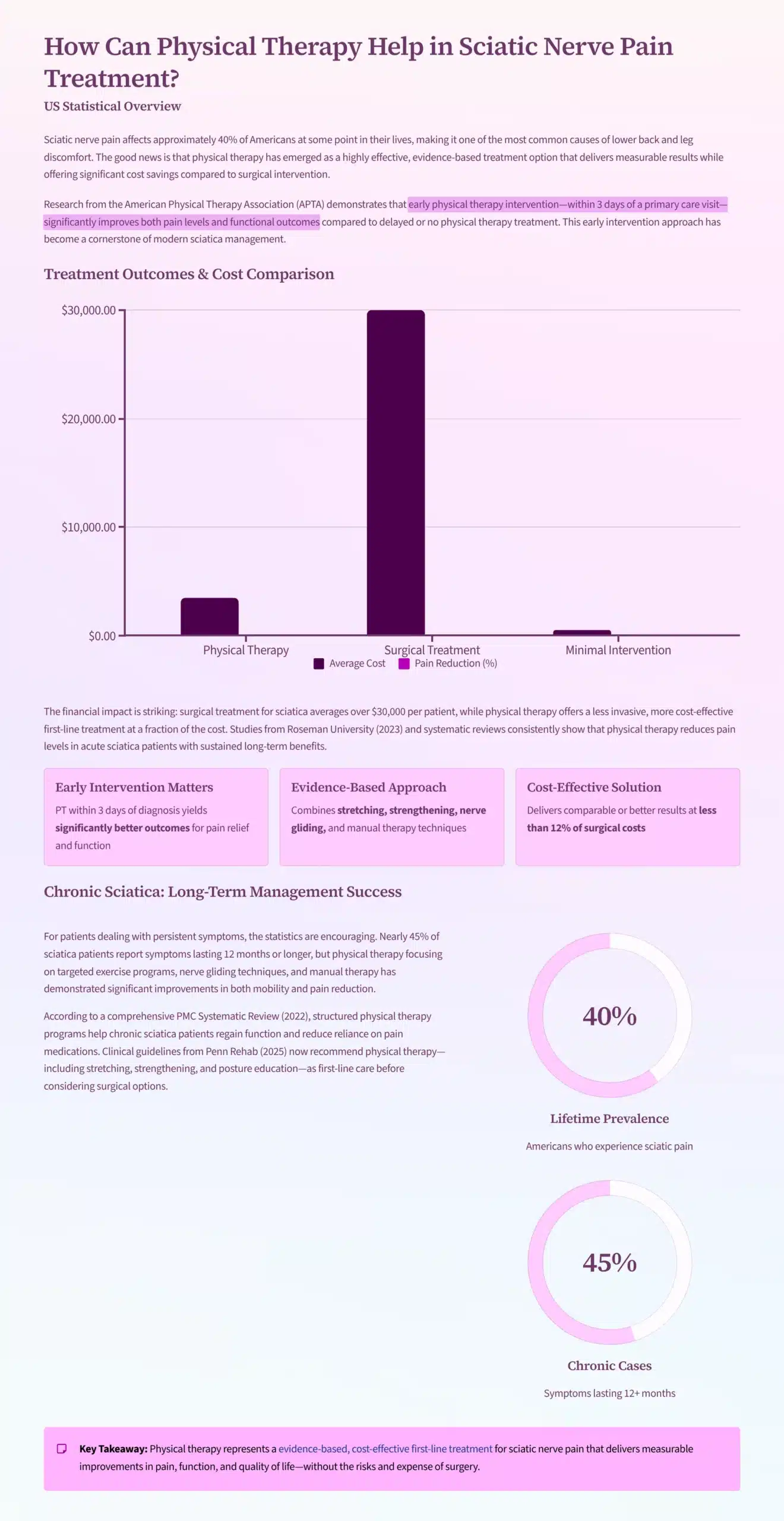
How Can Physical Therapy Help in Sciatic Nerve Pain Treatment? — US Statistical Overview
Prevalence: About 40% of Americans experience sciatic nerve pain at some point in their lives (BenchMark PT, 2025).
Treatment Impact: Early physical therapy (within 3 days of the primary care visit) significantly improves pain and functional outcomes compared to delayed or no PT (APTA, 2020).
Pain Reduction: Studies show that physical therapy reduces pain levels in patients with acute sciatica, with long-term benefits over minimal intervention (Roseman University, 2023; systematic reviews).
Cost Savings: Surgical treatment for sciatica averages over $30,000 per patient, while physical therapy is a less invasive, more cost-effective first-line treatment (Roseman University, 2023).
Chronic Sciatica: Nearly 45% of patients report symptoms lasting 12 months or longer; physical therapy focusing on exercise, nerve gliding, and manual therapy can improve mobility and reduce pain (PMC Systematic Review, 2022).
Clinical Guidelines: Physical therapy, including stretching, strengthening, and posture education, is recommended as first-line care before considering surgery (Penn Rehab, 2025).
Visual Suggestion: Bar chart comparing average costs and outcomes of physical therapy vs. surgery; pie chart showing prevalence; timeline showing symptom improvement with early PT intervention.
Spine and Pain Clinic Of Texas Serving the Plano Community and Beyond in Plano
Pine and Pain Clinic of Texas proudly serves the diverse needs of the local Plano community, including residents of the nearby Hebron neighborhood. Conveniently situated near well-known landmarks such as Austin Waters Community Pool and Arbor Hills Nature Preserve, our clinic is easily accessible for patients seeking effective Sciatica Treatment. With a location near major road crossings such as Silver Oak Dr and Windhaven Pkwy (coordinates: Latitude 33.058259, Longitude -96.842936), we ensure high-quality pain care is always within reach.
Get Sciatica Treatment Services at Plano Now
Call Us or Contact Us (146) 991- 55222
Navigate from Plano to Spine and Pain Clinic Of Texas Now
Frequently Asked Questions
- Can physical therapy completely eliminate sciatic nerve pain?
Physical therapy can significantly reduce or resolve symptoms in many cases, especially when the underlying cause is addressed early. - Is physical therapy painful for sciatica?
While some discomfort may occur during rehabilitation, therapy is designed to reduce pain, not intensify it. - How often is physical therapy recommended for sciatica?
Frequency varies, but many programs begin with two to three sessions per week, combined with home exercises. - What if my sciatic pain comes back after therapy?
Ongoing exercises and posture awareness help prevent recurrence, but flare-ups can be managed using techniques learned in therapy. - 5. When should I seek professional care for sciatic nerve pain?
- If pain persists beyond a few weeks, worsens, or includes numbness or weakness, professional evaluation such as that provided by Spine and Pain Clinic Of Texas is recommended.