


Lower back pain is something most people experience at least once in their lives. Sometimes it shows up after lifting something heavy. Other times, it creeps in slowly without an apparent cause. Because it’s so common, many people try to push through it or wait for it to pass. But there are moments when lower back pain is your body’s way of saying it needs more attention. Knowing when to see a Back Pain Doctor can help prevent short-term discomfort from turning into a long-term problem.
Lower back pain that lingers, worsens, or starts affecting daily life often needs a closer look. Clinics such as the Spine and Pain Clinic of Texas focus on understanding why pain persists and when professional evaluation becomes essential.
Understanding Lower Back Pain
The lower back, also called the lumbar spine, carries much of the body’s weight and supports movement like bending, twisting, and lifting. Because of this, it’s especially vulnerable to strain and wear.
Common Causes of Lower Back Pain
Muscle or ligament strain, joint irritation, disc problems, spinal degeneration, nerve compression, or poor posture can cause lower back pain. In many cases, pain results from a combination of factors rather than a single injury.
Acute vs Chronic Lower Back Pain
Acute lower back pain usually lasts a few days or weeks and improves with basic care. Chronic lower back pain lasts three months or longer and often signals an underlying issue that needs professional evaluation.
Why Lower Back Pain Is Often Ignored
One reason lower back pain becomes chronic is that it’s easy to dismiss at first.
The “It Will Go Away” Mindset
Because back pain is so common, many people assume it will resolve on its own. While that’s sometimes true, pain that sticks around often requires more than rest and patience.
When Lower Back Pain Becomes a Medical Concern
Specific patterns indicate that a Back Pain Doctor should evaluate lower back pain.
Duration as a Warning Sign
If lower back pain lasts more than two to four weeks without improvement, it’s a sign that rest alone may not be enough.
Increasing Pain Intensity
Pain that gradually worsens or becomes more frequent over time may point to inflammation, joint dysfunction, or nerve involvement.
Symptoms That Signal It’s Time to See a Back Pain Doctor
Some symptoms suggest a deeper issue that shouldn’t be ignored.
Pain That Radiates Down the Legs
Lower back pain that travels into the hips, thighs, or legs often involves nerve irritation. This type of pain typically requires medical evaluation.
Numbness, Tingling, or Weakness
Changes in sensation or strength can indicate nerve compression and should be assessed by a Back Pain Doctor.
Changes in Sensation or Balance
Difficulty maintaining balance or coordination may signal that the nervous system is affected.
Lower Back Pain That Interferes With Daily Life
Pain becomes more concerning when it disrupts normal activities.
Impact on Work and Sleep
If lower back pain makes it hard to sit, stand, work, or sleep comfortably, it’s time to seek professional insight.
For More Information, visit What Doctor Should I See for Back Pain That Doesn’t Improve After Rest?
The Role of Inflammation and Nerve Involvement
Inflammation in spinal joints or surrounding tissues can sensitize nerves, making pain more intense and persistent. This process often explains why pain doesn’t fade with rest alone.
Why Self-Treatment Isn’t Always Enough
Home remedies can help, but have limits.
Limits of Rest, Ice, and Medication
While these methods may temporarily reduce discomfort, they don’t correct structural problems or address nerve-related causes of pain.
What a Back Pain Doctor Evaluates
A Back Pain Doctor looks beyond where the pain is felt.
Physical Examination and History
Evaluation includes posture, movement, symptom patterns, and how pain changes with activity.
Identifying the Root Cause
The goal is to understand why pain persists so that treatment can be more targeted and effective.
Why Early Evaluation Matters
Addressing lower back pain early can prevent it from becoming chronic and more complicated to manage over time.
How Chronic Lower Back Pain Develops
When pain goes untreated, the nervous system can become more sensitive, causing it to linger even after the original trigger resolves.
The Value of Specialized Back Pain Care
Specialized care focuses on understanding complex pain patterns.
Comprehensive, Condition-Specific Insight
A Back Pain Doctor considers how joints, discs, nerves, and movement all contribute to symptoms.
How Clinics Like Spine and Pain Clinic Of Texas Approach Lower Back Pain
Clinics such as the Spine and Pain Clinic of Texas emphasize comprehensive evaluation, recognizing that lower back pain often has multiple contributing factors that need careful assessment.
Final Thoughts on Timing and Awareness
Lower back pain doesn’t always require immediate medical care, but persistent or worsening symptoms should never be ignored. Seeing a Back Pain Doctor Plano at the right time helps identify the root cause of pain and reduces the risk of long-term limitations. Paying attention to how pain behaves is often the first step toward better outcomes.
When Should You See a Back Pain Doctor for Lower Back Pain Symptoms?
Key US Statistics & Indicators
Prevalence:
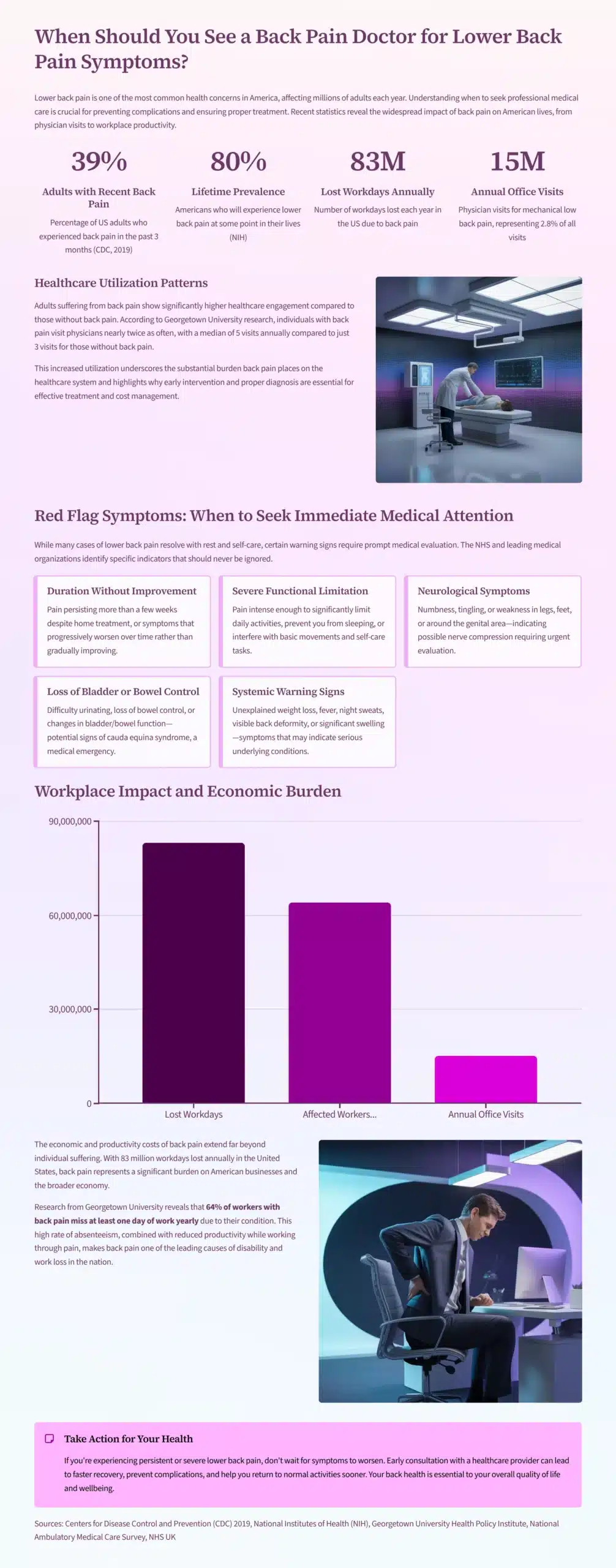
39% of US adults experienced back pain in the past 3 months (CDC, 2019).
About 80% of Americans will have lower back pain at some point in life (NIH).
Physician Visits:
Adults with back pain visit physicians nearly twice as often (median five visits) as those without back pain (median three visits) (Georgetown University).
Nearly 15 million office visits for mechanical low back pain occurred in 1990, representing 2.8% of all physician visits (National Ambulatory Medical Care Survey).
When to See a Doctor:
Pain lasting more than a few weeks without improvement.
Pain severe enough to limit daily activities or sleep.
Symptoms worsening over time or accompanied by:
Numbness/tingling in legs or around genitals.
Difficulty urinating or bowel control.
Unexplained weight loss or fever.
Back deformity or swelling. (NHS guidelines)
Impact on Work:
Back pain causes 83 million lost workdays annually in the US.
64% of workers with back pain miss at least 1 day of work each year due to illness/injury (Georgetown University).
Visual suggestion:
Bar chart comparing % adults with back pain vs. % visiting doctors.
Icons representing red-flag symptoms prompting urgent care.
Infographic of workdays lost due to back pain.
Sources: CDC 2019, NIH, Georgetown University Health Policy Institute, NHS UK
Spine and Pain Clinic Of Texas Serving the Little Elm Community and Beyond in Frisco
Spine and Pain Clinic of Texas is dedicated to serving the diverse needs of the local community of Frisco, including individuals residing in neighborhoods like Little Elm. With its convenient location near landmarks such as Urban Air Trampoline and Adventure Park and major intersections like Parkway Towne Xing and Eldorado Pkwy (coordinates: Latitude: 33.173909, Longitude: -96.842936), we offer Back Pain Doctor services.
Get Back Pain Doctor Services at Little Elm Now
Call Us or Contact Us (146) 991- 55222
Navigate from Little Elm to Spine and Pain Clinic Of Texas Now
Frequently Asked Questions
- How long should I wait before seeing a Back Pain Doctor for lower back pain?
If pain lasts longer than two to four weeks or worsens, professional evaluation is recommended. - Does injury always cause lower back pain?
No. Degeneration, inflammation, posture, and nerve sensitivity can all play a role. - Can lower back pain improve without treatment?
Some cases do, but persistent pain often needs medical assessment. - Does radiating leg pain mean something serious?
Radiating pain often involves nerves and should be evaluated. - 5. Why does lower back pain come back after rest?
- Rest doesn’t correct underlying structural or nerve-related issues, which can cause pain to return.