
Medically reviewed by Dr. Muhammad Arif, MD, Board-Certified Pain Management Specialist, Spine & Pain Clinic of Texas.
If neck pain that radiates down into your shoulder, arm, or hand is making everyday tasks miserable, you’re not alone, and you have options beyond surgery. A cervical epidural steroid injection is a minimally invasive, image-guided treatment that can calm inflamed nerves in the neck and provide meaningful relief from radiating pain. For many patients, it’s a turning point that restores comfort and function without going under the knife.
In this guide, we’ll walk through what the procedure is, how it works, who it helps, and what you can realistically expect before, during, and after.
What Is a Cervical Epidural Steroid Injection?
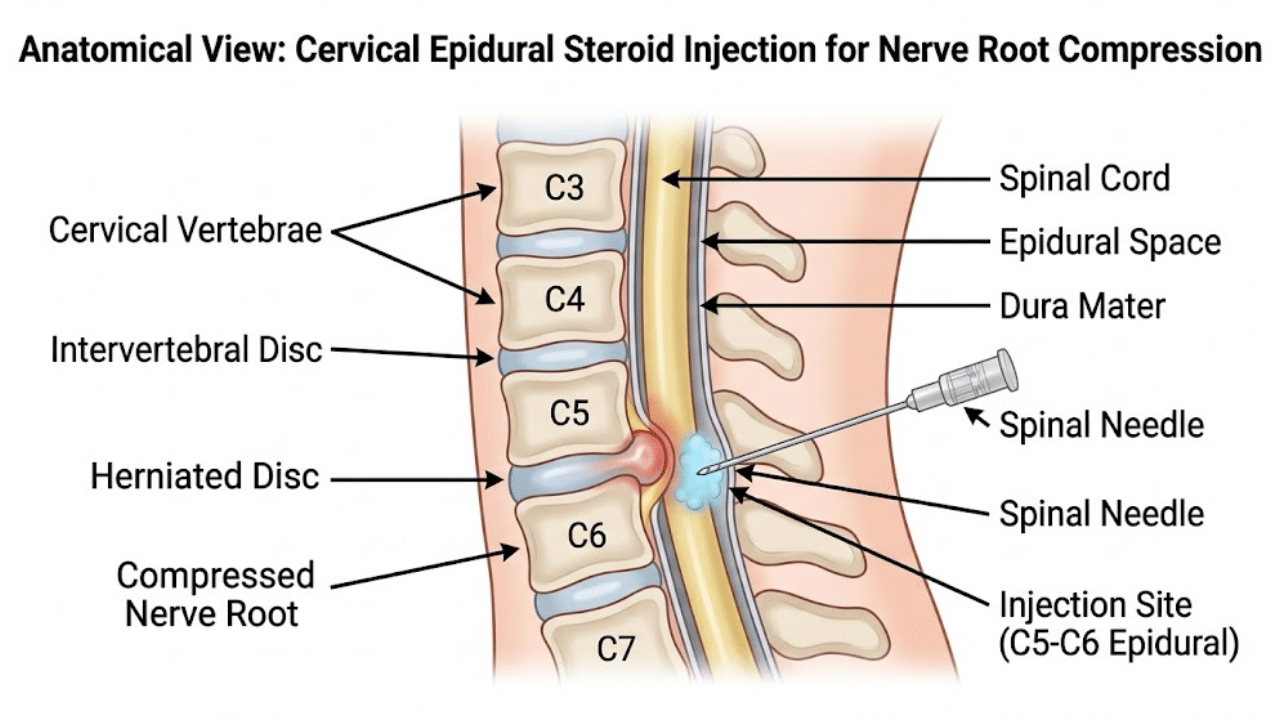
A cervical epidural steroid injection (often shortened to cervical ESI) delivers anti-inflammatory medication directly into the epidural space of the neck, the area surrounding the spinal cord and nerve roots. The goal is to reduce inflammation around irritated or compressed nerves in the cervical spine (the vertebrae labeled C1 through C7).
The injection typically combines a corticosteroid, which reduces inflammation, with a local anesthetic for immediate, short-term relief. By targeting the source of nerve irritation, the treatment can quiet the pain signals traveling from your neck down into your arm.
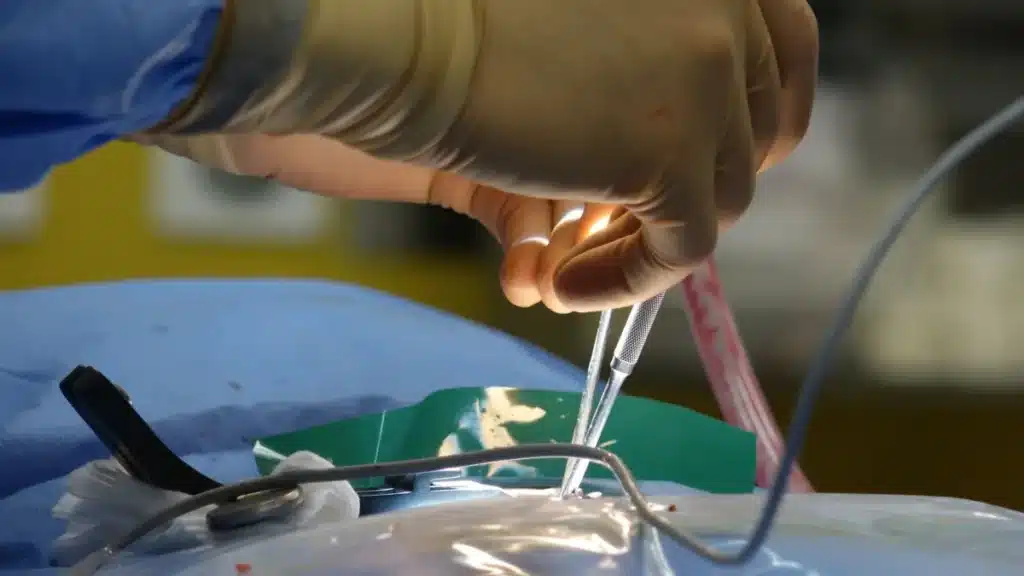
At Spine & Pain Clinic of Texas, this procedure is performed by Dr. Muhammad Arif, board-certified pain specialist, using precise fluoroscopic (live X-ray) guidance to maximize both safety and accuracy.
How Does It Work?
When a nerve in your cervical spine becomes pinched or inflamed, often from a herniated disc, bone spur, or narrowing of the spinal canal, it can send pain, tingling, numbness, or weakness down the path of that nerve. This is why a neck problem can cause arm and hand symptoms.
The steroid medication works by reducing the inflammation and swelling around the affected nerve root. As the inflammation subsides, the nerve is no longer as irritated or compressed, and the radiating pain often eases. This can also create a valuable window of reduced pain, physical therapy and rehabilitation far more effective.
Which Conditions and Symptoms Does It Help?
A cervical ESI is commonly used to treat pain caused by nerve irritation in the neck. It may help patients dealing with:
- Cervical radiculopathy: pinched nerve pain radiating into the shoulder, arm, or hand
- Herniated or bulging cervical discs pressing on nearby nerves
- Cervical spinal stenosis narrowing of the spinal canal
- Degenerative disc disease in the neck
- Bone spurs (osteophytes) irritate nerve roots
Typical symptoms that respond well include radiating arm pain, tingling or “pins and needles,” numbness, and certain types of neck pain linked to nerve inflammation. If you’re unsure whether your symptoms fit, our experienced pain management team can evaluate your specific situation.
Who Is a Good Candidate?
You may be a good candidate for a cervical epidural steroid injection if:
- You have neck pain that radiates into your arm or hand.
- Conservative treatments like rest, medication, and physical therapy haven’t provided enough relief.
- Imaging (MRI or CT) and a clinical exam point to nerve compression or inflammation in the cervical spine.
- You want to avoid or delay surgery, or are ready to consider it.
Not everyone is an ideal candidate. Patients with active infections, certain bleeding disorders, uncontrolled diabetes, or specific allergies may need an alternative approach. A thorough evaluation helps determine whether this treatment is right and safe for you.

What to Expect: Before, During, and After
Before the Procedure
Your care begins with a detailed review of your symptoms, medical history, and imaging. You’ll receive instructions on which medications to pause, particularly blood thinners, and whether to arrange a ride home. The procedure itself is performed in an outpatient setting, so there’s no hospital stay.
During the Procedure
The injection is typically quick, often taking about 15 to 30 minutes. Here’s the general flow:
- You’ll lie comfortably, usually face-down, and the skin is cleaned and numbed.
- Using fluoroscopic guidance, the physician precisely positions the needle into the epidural space.
- A contrast dye may be used to confirm correct placement.
- The steroid and anesthetic mixture is carefully injected.
Most patients feel pressure rather than sharp pain. The image guidance is what allows the medication to be placed exactly where it’s needed.
After the Procedure
You’ll be monitored briefly, then can usually go home the same day. It’s normal to rest for the remainder of the day and avoid strenuous activity for 24 hours. Some patients notice quick relief from the anesthetic, followed by a temporary return of pain before the steroid takes full effect.
Recovery Timeline and How Long Relief Lasts
Most people return to light, normal activities within a day or two. The local anesthetic may offer brief relief within hours, but the corticosteroid generally takes two to seven days to reach its full anti-inflammatory effect.
When it comes to how long relief lasts, results vary from person to person. Some patients experience relief for several weeks; others enjoy benefits for many months. A series of injections is sometimes recommended over time, and the relief window is often used to make rehabilitation and physical therapy more productive, supportive, and longer-lasting.
Benefits Compared to Surgery
For the right patient, a cervical ESI offers several advantages over surgical intervention:
- Minimally invasive: No incisions, no general anesthesia
- Outpatient: Performed in-office with a quick recovery
- Low downtime: Most patients resume routine activity within days
- Diagnostic value: Relief can help confirm the specific source of pain
- A bridge to rehab: Reduced pain enables more effective physical therapy
It’s important to set realistic expectations: an injection isn’t a guaranteed cure, and it doesn’t repair structural problems. But for many people, it provides substantial relief and helps them avoid more aggressive treatment.
Safety and Risks
Cervical epidural steroid injections have a strong safety record when performed by an experienced specialist under image guidance. As with any medical procedure, there are some risks, which may include temporary soreness at the injection site, headache, short-term blood sugar elevation, or, rarely, infection or nerve irritation.
This is exactly why provider experience and proper technique matter so much. At Spine & Pain Clinic of Texas, Dr. Arif performs this procedure under precise fluoroscopic guidance to maximize safety and minimize complications. Your physician will discuss your individual risk factors before moving forward.
When to See a Specialist
Consider scheduling an evaluation if you have neck or arm pain that:
- Persists despite rest and conservative care
- Radiates into your shoulder, arm, or hand
- Comes with numbness, tingling, or weakness
- Interferes with sleep, work, or daily life
Seek prompt medical attention for severe weakness, loss of coordination, or any loss of bladder or bowel control, as these can signal a more serious problem.
Find Relief at Spine & Pain Clinic of Texas
A cervical epidural steroid injection could be the step that finally relieves your neck and arm pain and helps you get back to living comfortably. Our team offers compassionate, image-guided care designed around your needs.
We welcome patients at four convenient locations: Plano, Grand Prairie, Tyler, and Longview.
Ready to take the next step? Contact us to schedule your consultation and find out whether this treatment is right for you.
Frequently Asked Questions
Is a cervical epidural steroid injection painful?
Most patients feel pressure rather than sharp pain. The skin is numbed beforehand, and the procedure is generally well-tolerated. Mild soreness at the injection site afterward is normal and usually short-lived.
How long does it take for a cervical epidural injection to work?
The local anesthetic may provide brief relief within hours, but the steroid typically takes two to seven days to reach full effect. Some patients notice a temporary increase in pain before the medication kicks in.
How long does relief from a cervical epidural injection last?
Results vary. Some patients experience relief for a few weeks, while others benefit for several months. The pain-free window is often used to support physical therapy for longer-lasting improvement.
How many cervical epidural injections can I have?
This depends on your response and overall health. Injections are often limited to a few per year and spaced out over time. Your specialist will recommend a plan tailored to your condition.
Will I need surgery if the injection doesn’t fully work?
Not necessarily. If an injection provides only partial relief, other non-surgical options may be considered first. Surgery is generally reserved for cases that don’t respond to conservative and minimally invasive care.