

- Serving Plano, Longview, Grand Prairie & Tyler
BOTOX FOR CHRONIC MIGRAINES ACROSS TEXAS FOR LASTING RELIEF
Stop 15+ headache days a month before they even start. FDA-approved, targeted Botox therapy administered by board-certified pain specialists in the DFW Metroplex and East Texas.
Trusted by 10,000+ patients


Board-Certified
Pain Management Specialist
Medical-Grade Braces
Clinical Prescription & Custom Fit
Same-Week Appointments
Across 4 Texas Locations
Insurance Accepted
Medicare & Most Major Plans
Understanding Botox
What Is Botox® for Chronic Migraines across Texas?
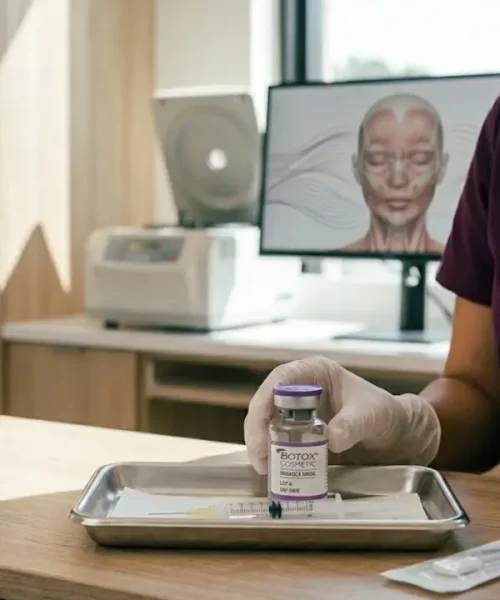
Botox® is the first and only FDA-approved treatment designed to prevent migraines before they start. At the Spine & Pain Clinic of Texas, our interventional specialists use precise Botox injections to block the chemical signals that carry pain messages to your brain. By interrupting these pathways, we can significantly reduce the frequency and severity of your debilitating headaches, helping you reclaim your life, your career, and your family time.
Treatment Benefits
Why Choose Botox For Migraine Relief in Texas?
Discover how our targeted, preventative approach provides superior relief compared to daily oral medications.
FDA-Approved
The leading clinically proven, FDA-cleared preventative treatment for adults with Chronic Migraine.
Prevents Headaches
Stops the pain network before a migraine begins, drastically reducing your total monthly headache days.
Fast, In-Office Procedure
Treatments take just 15 to 20 minutes right in our Texas clinics, with zero downtime required.
Long-Lasting Relief
A single treatment session provides continuous, localized headache prevention for up to 12 weeks.
Reduces Pill Dependency
Decreases your reliance on acute, over-the-counter medications that often cause rebound headaches.
Texas-Wide Access
Conveniently available at our state-of-the-art clinics in Plano, Grand Prairie, Tyler, and Longview.
Eligibility
Do I Qualify for Botox Migraine Therapy?
We know how exhausting it is to constantly search for a treatment that actually works. Because Botox® is a highly specialized, FDA-approved preventative therapy, it is designed specifically for a condition known as Chronic Migraine.
Take a moment to review the clinical criteria below. If you are a resident of the DFW Metroplex or East Texas dealing with these symptoms, Dr. Arif can help.
- Do you experience 15 or more headache days every single month?
- When you get a headache, does it last for 4 hours or longer?
- Have standard over-the-counter pills or prescription oral medications failed to stop your pain?
- Are your migraines forcing you to miss work, skip family events, or hide in a dark room?
The Process
What to Expect During Botox Therapy in Texas
We have refined our clinical process to ensure maximum comfort and precise, effective pain relief for every patient.
1
Comprehensive Neurological Assessment
Dr. Arif begins with an in-depth review of your headache history, ruling out other cervical issues to confirm that Botox is the ideal clinical path for your specific migraine pathology.
2
Targeted Micro-Injections
Using a very fine needle, Botox is precisely administered to 31 specific, shallow sites across 7 key muscle areas of your head and neck. The injections feel like tiny pinpricks.
3
Zero Downtime Recovery
The entire process takes roughly 15 minutes. Because the treatment is minimally invasive, you can safely drive yourself home and resume your normal Texas lifestyle immediately.
4
Sustained Optimization
Results build over time. Most patients see the maximum reduction in migraine days after their second or third treatment cycle. We schedule your sessions 12 weeks apart to maintain a pain-free life.
Important Safety Information
- not recommended for individuals with specific neurological diseases or allergies to Botox ingredients.
- The most common side effects are temporary neck pain or mild soreness at the injection site.
- Dr. Arif will review your full medical history prior to treatment to ensure your absolute safety.
- Results vary; this is not a guarantee of migraine relief

TRUSTED EXPERTISE
DR. Muhammad Arif, MD
Board-Certified Pain Management Specialist | Spine & Pain Clinic of Texas
Pain Specialist
Treating chronic migraines with Botox requires an intimate understanding of cranial anatomy and precise injection techniques. It should never be trusted to uncertified staff.
Dr. Muhammad Arif brings over two decades of specialized training in interventional pain management and neurology to his patients. As the Medical Director of the Spine & Pain Clinic of Texas, he personally oversees your care, ensuring your Botox therapy is integrated perfectly into your broader health profile.
- Board Certified in Pain Medicine (ABA) and Anesthesiology
- Fellowship-trained in Interventional Pain Management
- Active member of the American Society of Interventional Pain Physicians (ASIPP)
- Serving 4 clinic locations across North and East Texas
Insurance Accepted


Our Expertise
Specialized Pain Management Services Across Texas
Whether you are struggling to keep up with the family at a Texas Rangers game or finding your daily commute down I-20 unbearable, our non-surgical treatments are designed to safely restore your mobility. Every interventional care plan is custom-tailored to your specific condition, helping you get back to the active lifestyle you deserve.
Lumbar Epidural Steroid Injection
Lumbar epidural steroid injections deliver anti-inflammatory medication directly to the epidural space around spinal nerves, providing targeted relief for lower back and radiating leg pain.
- Who It Helps
- People experiencing spinal stenosis symptoms
- Those with herniated or bulging discs
- Patients with sciatica or radiating leg pain
- What to Expect
- Procedure typically takes 15-30 minutes
- Local anesthesia for comfort
- Most patients resume normal activities within 24-48 hours
Cervical Epidural Steroid Injection
Cervical epidural injections target inflammation around neck spinal nerves to reduce pain that may radiate into the shoulders and arms, often caused by disc problems or nerve compression.
- Who It Helps
- Individuals with chronic neck pain
- Those experiencing arm numbness or weakness
- Patients with cervical disc herniation
- What to Expect
- Fluoroscopic guidance for precision
- Sedation options available
- Follow-up evaluation to assess response
Knee Joint Injection
Knee joint injections can include corticosteroids or hyaluronic acid to reduce inflammation and improve joint lubrication, helping restore mobility and reduce knee pain.
- Who It Helps
- Patients with knee osteoarthritis
- Those with chronic knee inflammation
- Individuals who have not responded to oral medications
- What to Expect
- Quick in-office procedure
- Ultrasound guidance may be used
- Gradual improvement over days to weeks
Facet Block
Facet blocks inject local anesthetic and steroid into the facet joints of the spine to diagnose and treat pain originating from these small joints that connect vertebrae.
- Who It Helps
- Patients with pain when bending or twisting
- Those with facet joint arthritis
- Individuals with localized spinal tenderness
- What to Expect
- Diagnostic and therapeutic purposes
- Fluoroscopy-guided injection
- May be repeated if beneficial
Hip Joint Injection
Hip joint injections deliver medication directly into the hip joint capsule to reduce inflammation and pain associated with arthritis, bursitis, or other hip conditions.
- Who It Helps
- Patients with hip osteoarthritis
- Those with hip bursitis
- Individuals with limited hip mobility
- What to Expect
- Image-guided for accuracy
- Can provide weeks to months of relief
- May be part of a comprehensive treatment plan
Shoulder Injection
Shoulder injections target the glenohumeral joint or surrounding bursa to reduce inflammation and pain from conditions like rotator cuff issues, frozen shoulder, or arthritis.
- Who It Helps
- Patients with rotator cuff tendinitis
- Those with frozen shoulder (adhesive capsulitis)
- Individuals with shoulder arthritis
- What to Expect
- Performed in office setting
- Ultrasound guidance for precision
- Physical therapy often recommended alongside
PRP Injection
Platelet-rich plasma (PRP) injections use concentrated platelets from your own blood to promote healing and reduce inflammation in damaged tendons, ligaments, and joints.
- Who It Helps
- Patients with tendon injuries
- Those with mild to moderate arthritis
- Individuals seeking regenerative options
- What to Expect
- Blood draw and processing on-site
- Injection into affected area
- Multiple sessions may be recommended
Stem Cell Injections
Stem cell therapy uses cells with regenerative potential to support tissue repair and reduce inflammation in joints and soft tissues affected by injury or degeneration.
- Who It Helps
- Patients with degenerative joint conditions
- Those with chronic tendon issues
- Individuals exploring regenerative treatments
- What to Expect
- Comprehensive evaluation required
- Cell processing and injection same day
- Gradual improvement over months
Trigger Point Injections
Trigger point injections target painful muscle knots with local anesthetic and sometimes corticosteroid to relieve muscle tension, spasms, and referred pain patterns.
- Who It Helps
- Patients with myofascial pain syndrome
- Those with chronic muscle tension
- Individuals with tension headaches from muscle tightness
- What to Expect
- Quick procedure with minimal discomfort
- Immediate relief often experienced
- May be combined with physical therapy
Nerve Blocks
Nerve blocks inject anesthetic near specific nerves to interrupt pain signals, providing diagnostic information and therapeutic relief for various chronic pain conditions.
- Who It Helps
- Patients with localized nerve pain
- Those with complex regional pain syndrome
- Individuals with post-surgical pain
- What to Expect
- Diagnostic and treatment purposes
- Image guidance for accuracy
- May be repeated as part of treatment plan
Radiofrequency Ablation (RFA)
Radiofrequency Ablation (RFA) uses heat generated by radio waves to target specific nerves and temporarily turn off their ability to send pain signals to the brain.
- Who It Helps
- Patients with chronic lower back or neck pain.
- Patients with previous relief from nerve blocks
- Individuals with arthritis of the spine (spondylosis).
- What to Expect
- Minimally invasive, image-guided procedure.
- Can provide months to years of prolonged pain relief.
- Performed under local anesthesia, sometimes with mild sedation.
Botox Injections
Therapeutic Botox injections can help manage chronic migraines and certain muscle spasticity conditions by blocking nerve signals that trigger pain and muscle contractions.
- Who It Helps
- Those with cervical dystonia
- Individuals with muscle spasticity
- Patients with chronic migraines (15+ headache days/month)
- What to Expect
- Multiple injection sites may be needed
- Effects typically last 3-4 months
- Follow-up for treatment optimization
Find Your Clinic
Our 4 Convenient Locations
Across Texas
Choose the clinic nearest you for back, neck, joint, and nerve pain care. We serve the DFW Metroplex and East Texas regions.
Plano, TX 75024, United States
Grand Prairie, TX 75051
Tyler, TX 75703, United States
Longview, TX 75604, United States
FAQ
Frequently Asked Questions
Common questions about our pain management services and what to expect at our Texas clinic.
How do I know if I qualify for Botox for migraines?
If you have a history of migraine headaches and experience 15 or more headache days a month (with headaches lasting 4 hours a day or longer), you likely meet the clinical criteria for Chronic Migraine and may qualify for Botox therapy.
Does insurance cover Botox for migraines in Texas?
Yes! Because it is an FDA-approved medical treatment (not cosmetic), Botox for Chronic Migraines is covered by most major health insurance plans, including Medicare. Our billing department will handle the prior authorization process for you.
Does the Botox procedure hurt?
Patients typically report only mild, brief discomfort. The needle used is incredibly fine, and the injections are very shallow. The entire process takes just 15 minutes, and no anesthesia is required.
How soon will I see results?
While some patients notice relief within a few weeks, Botox results compound over time. The most significant reduction in headache days typically occurs after your second treatment cycle (at week 24).
Where exactly are the Botox injections given?
Botox for Chronic Migraines involves 31 precise, shallow injections across 7 key muscle areas. These specific sites include the forehead, the bridge of the nose, the temples, the back of the head, the neck, and just above the shoulder blades. Dr. Arif targets these exact areas because they are where the nerve endings responsible for triggering your migraine pain are located.
Is spine surgery safe?
Spine surgery is generally safe when performed by experienced specialists using modern techniques and proper aftercare.