
Medically reviewed by Dr. Muhammad Arif, MD, Board-Certified Pain Management Specialist, Spine & Pain Clinic of Texas.
If you’ve been living with stubborn neck or back pain and no one can tell you exactly where it’s coming from, you’re not alone. A facet block is a minimally invasive injection that helps your physician pinpoint whether your pain originates from the small joints in your spine, and, in many cases, provides meaningful relief at the same time. It’s one of the most useful diagnostic tools in modern pain management because it answers a critical question: Are your facet joints the source of your pain?
In this guide, we’ll explain what a facet block is, how it works, who benefits from it, and what to expect before, during, and after the procedure.
What Is a Facet Block?
Your spine contains small, paired joints called facet joints that connect each vertebra to the one above and below it. These joints allow you to bend, twist, and move smoothly. When they become inflamed or arthritic, they can generate significant pain in the neck, mid-back, or lower back.
A facet block is an injection of a local anesthetic — sometimes combined with a corticosteroid — placed directly at or near the affected facet joint. The procedure serves two purposes:
- Diagnostic: If your pain improves significantly right after the anesthetic takes effect, it strongly suggests the facet joint is the source.
- Therapeutic: The anti-inflammatory steroid can reduce inflammation and provide longer-lasting relief.
At Spine & Pain Clinic of Texas, our facet block injections are performed by experienced, board-certified physicians using image guidance for precision and safety.
How Does a Facet Block Work?
The procedure works on a simple principle: numb the suspected joint and observe the effect on your pain.
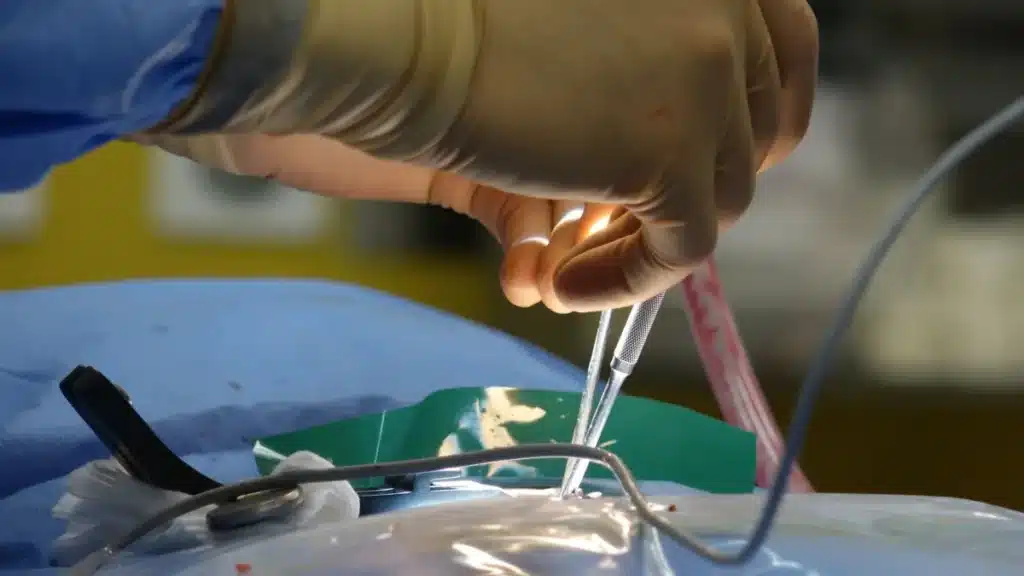
Using live X-ray imaging (fluoroscopy), your physician guides a thin needle to the precise location of the targeted facet joint. A small amount of contrast dye may be used to confirm correct needle placement before the medication is injected.
Once the anesthetic is delivered, you’ll be asked to note how your pain responds over the next several hours. A meaningful drop in pain — often 50% or more, points to the facet joint as the culprit. This information helps guide the next step in your care, which may include a longer-lasting treatment such as radiofrequency ablation.
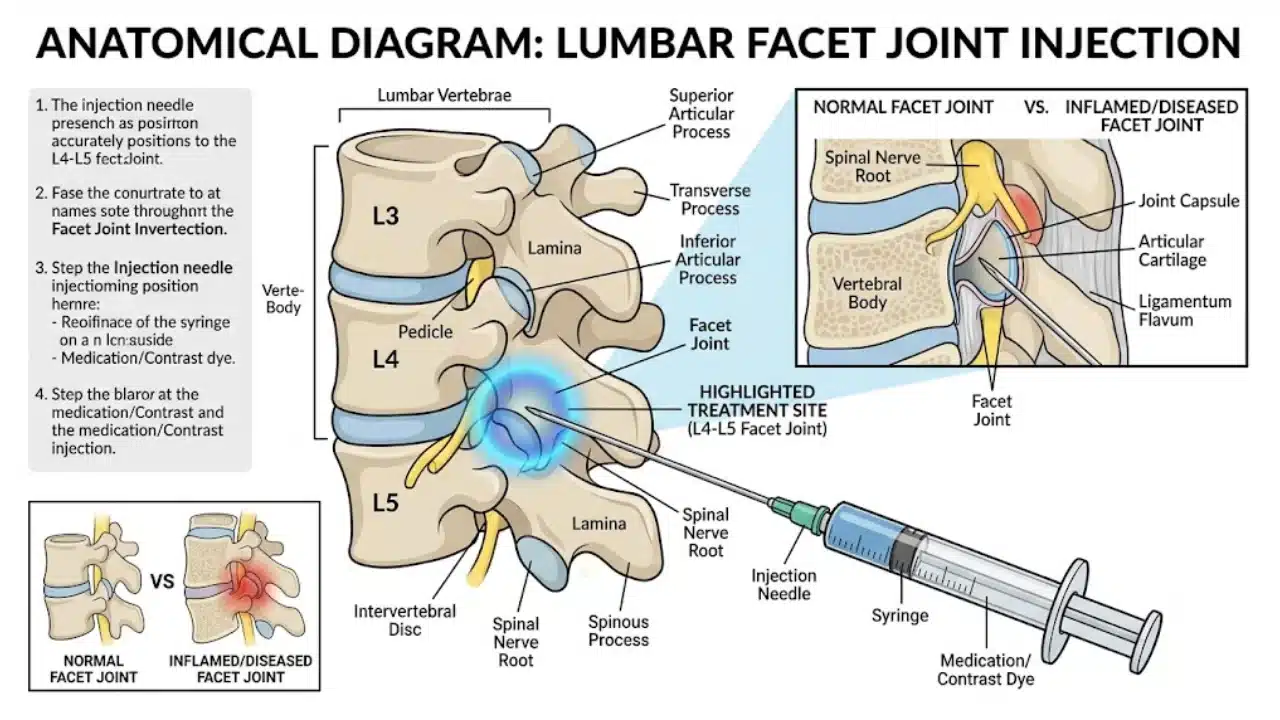
[ALT TEXT: Anatomical diagram of spinal facet joints showing the facet block injection site for back pain]
What Conditions and Symptoms Does It Help?
A facet block may be recommended when facet joint dysfunction is suspected. Common conditions and symptoms include:
- Facet joint arthritis (osteoarthritis of the spine)
- Chronic neck pain that worsens with looking up or turning the head
- Lower back pain that intensifies when leaning backward or standing
- Pain from spinal degeneration or aging-related wear
- Stiffness and reduced range of motion in the spine
- Localized pain that doesn’t radiate far down the arms or legs
Patients often describe facet-related pain as a deep, aching discomfort that gets worse with certain movements and eases when bending forward or sitting.
Who Is a Good Candidate?
A facet block may be right for you if:
- You’ve had persistent neck or back pain for several weeks or longer.
- Conservative treatments, rest, physical therapy, medication haven’t provided enough relief.
- Your physician suspects the facet joints based on your exam and symptoms.
- You want to avoid or delay surgery and prefer a non-surgical option.
Every patient is different. A thorough evaluation by Dr. Muhammad Arif, board-certified pain specialist, helps determine whether a facet block fits your specific diagnosis and goals.
What Happens Before, During, and After the Procedure
Before
Your physician reviews your medical history, imaging, and symptoms. You’ll receive instructions about medications — particularly blood thinners, and what to eat or drink beforehand. The procedure itself is outpatient, so you’ll need someone to drive you home.
During
The facet block typically takes 15 to 30 minutes. You’ll lie on your stomach while the skin is cleaned and numbed. Using fluoroscopic guidance, your physician carefully positions the needle and delivers the medication. Most patients feel only mild pressure. At Spine & Pain Clinic of Texas, Dr. Arif performs this procedure under precise fluoroscopic guidance to maximize both safety and accuracy.
After
You’ll rest briefly and then go home the same day. It’s normal to feel some soreness at the injection site for a day or two. You’ll be asked to track your pain levels, since this feedback is key to the diagnostic value of the procedure.

Recovery Timeline
Recovery from a facet block is generally quick:
- Day of procedure: Rest and avoid strenuous activity. Mild soreness is common.
- 24–48 hours: Anesthetic effects fade; any steroid begins to take effect.
- 3–7 days: If a corticosteroid was used, anti-inflammatory relief typically builds during this window.
- Ongoing: Many patients return to normal activities the next day.
The duration of relief varies. Some patients experience weeks to months of improvement, while others use the diagnostic information to plan longer-lasting treatments.
Facet Block vs. Surgery: Why Many Patients Start Here
For most patients, a facet block is a sensible first step long before surgery is ever considered.
- Minimally invasive: No incisions, no general anesthesia, no hospital stay.
- Fast recovery: Most people resume daily life within a day.
- Diagnostic clarity: It confirms the pain source, helping avoid unnecessary procedures.
- Lower risk: Far fewer complications than spinal surgery.
Surgery may still be appropriate for some conditions, but a facet block helps ensure that any future decision is based on solid evidence about where your pain truly comes from.
Safety and Risks
Facet blocks have a strong safety record when performed by experienced specialists using image guidance. Still, as with any medical procedure, some risks exist. Possible side effects include temporary soreness, mild bruising, or a short-term increase in pain. Rare risks include infection, bleeding, allergic reaction, or temporary numbness.
Working with a skilled, board-certified team significantly reduces these risks. You can learn more about our experienced pain management team and their approach to safe, image-guided care.
When to See a Specialist
Consider seeing a pain management specialist if:
- Your back or neck pain has lasted more than a few weeks.
- Pain interferes with sleep, work, or daily activities.
- Over-the-counter medications and rest aren’t enough.
- You want a clear diagnosis before considering surgery.
A facet block can deliver the answers and the relief you’ve been searching for. Identifying the true source of your pain is the first step toward an effective, personalized treatment plan.
Find Relief at Spine & Pain Clinic of Texas
If chronic neck or back pain is holding you back, our team is here to help with compassionate, expert, non-surgical care. Schedule a consultation at any of our convenient Texas locations: Plano, Grand Prairie, Tyler, or Longview.
Ready to take the next step toward lasting relief? Contact us today to book your appointment.
Frequently Asked Questions
Is a facet block painful?
Most patients feel only mild pressure or a brief pinch. The skin is numbed beforehand, and the procedure is performed under image guidance to keep discomfort to a minimum. Some soreness at the injection site for a day or two afterward is normal.
How long does a facet block last?
It varies. The numbing effect provides immediate, short-term relief, while the steroid component may offer weeks to months of improvement. The diagnostic information it provides is just as valuable, since it guides your next treatment steps.
How do I know if my back pain is coming from the facet joints?
Facet-related pain often worsens with bending backward, twisting, or standing, and improves when leaning forward. A facet block confirms the source: if your pain drops significantly after the injection, the facet joints are likely responsible.
How soon can I return to normal activities?
Most patients resume normal activities the day after the procedure. You’ll be advised to avoid strenuous activity for the first 24 hours and to monitor your pain response.
What happens if the facet block works?
If you get significant relief, it confirms the facet joints as your pain source. Your physician may then recommend a longer-lasting treatment, such as radiofrequency ablation, to extend the benefit.