
A Quiet Shift in How We Think About Long-Term Opioid Use
Millions of Americans have been managing chronic pain with opioid medications for years, sometimes decades. Many of them quietly wonder whether there’s a better path. As of July 2026, emerging research published by Stanford Medicine reports something genuinely encouraging: many chronic pain patients can reduce their opioid use when they taper slowly and voluntarily, at their own pace.
In this guide
- A Quiet Shift in How We Think About Long-Term Opioid Use
- What the Stanford Research Actually Says
- How Does Botox for Chronic Migraines Work in Grand Prairie, TX?
- Who Is This Treatment NOT Ideal For?
- What to Expect at a Botox for Migraine Appointment
- Connecting the Opioid Taper News to Non-Opioid Pain Treatment in Texas
- Taking the Next Step Toward Relief in Grand Prairie, TX
- FAQ
This is meaningful news. For a long time, the conversation around opioids and chronic pain has felt stuck. Patients are told to take less, but nobody seems to have a plan for what happens to their pain in the meantime. The Stanford research suggests the picture may be more hopeful than that, especially when the process is gradual and voluntary rather than abrupt or forced.
What the Stanford Research Actually Says
Reports suggest that when patients are given the time and support to reduce opioid doses slowly, rather than being forced to stop quickly, many can do so without their pain becoming unmanageable. The keyword researchers emphasize is voluntary. Patients who chose to taper at a pace they felt comfortable with reportedly had better outcomes than those required to taper on a fixed schedule.
Early research also indicates that some patients who tapered reported their pain remained at similar levels or, in some cases, actually improved over time. That last point surprises many people. It may have to do with how long-term opioid use can sometimes affect the nervous system’s ability to process pain signals. This concept, called opioid-induced hyperalgesia, means the medication itself may increase pain sensitivity over time. According to the Mayo Clinic, this is a recognized concern with prolonged opioid therapy.

What This Means If You’re in the Dallas-Fort Worth Area
If you’re currently managing chronic pain with opioids and you live in Grand Prairie, Arlington, Irving, Duncanville, Cedar Hill, Mansfield, or anywhere in the DFW Mid-Cities area, this research is worth a conversation with your pain management specialist. The goal isn’t to suffer through pain without support. The goal is to explore whether non-opioid treatments can take on more of the work.
That’s exactly where interventional pain management comes in. Procedures like nerve blocks, epidural steroid injections, and Botox for migraines are designed to address specific pain sources directly, without the systemic effects that come with long-term oral medications.
How Does Botox for Chronic Migraines Work in Grand Prairie, TX?
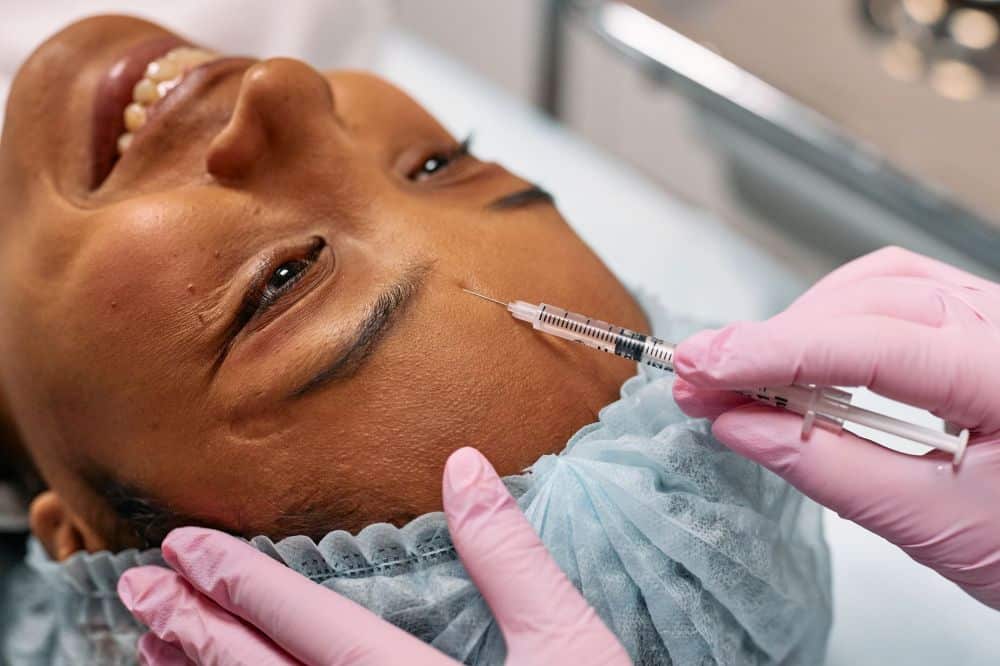
Botox for Chronic Migraines (formally called OnabotulinumtoxinA therapy) is an FDA-approved treatment specifically for adults who experience 15 or more headache days per month, with at least eight of those qualifying as migraines. It is not just a cosmetic treatment. When used for chronic migraine prevention, small doses are injected into very specific muscle groups around the head and neck to reduce the frequency and severity of headache attacks.
The injections target muscles in the forehead, temples, back of the head, neck, and upper shoulders. The medication works by temporarily blocking chemical signals at the nerve endings in those muscles. That, in turn, may reduce the cascade of neurological activity that triggers a migraine episode. According to the Cleveland Clinic, Botox for chronic migraine is typically administered every 12 weeks and may take two or more treatment cycles before the full benefit appears.
Who May Be a Candidate?
Botox for migraines is generally considered for adults with chronic migraine, defined as 15 or more headache days per month. It is not typically the first treatment tried. Most patients will have already attempted oral preventive medications (like certain blood pressure drugs or antidepressants used off-label for headache prevention) before their doctor considers Botox. If those haven’t worked well, or if side effects have been a problem, Botox may be worth discussing.
Patients who also deal with neck pain or tension-type features alongside their migraines sometimes find the treatment addresses more than one concern at once, since the injection sites include the neck and upper shoulder muscles. If you’re searching for a pain clinic near you in Grand Prairie, TX, the Spine and Pain Clinic of Texas offers this treatment and can help determine whether your headache pattern matches the criteria.
Who Is This Treatment NOT Ideal For?
Honesty matters here. Botox for migraines is not a fit for everyone. It is generally not recommended for patients who have fewer than 15 headache days per month, since the FDA approval specifically covers chronic migraine rather than episodic migraine (fewer than 15 headache days monthly). Patients with certain neuromuscular conditions, known allergies to botulinum toxin, or active infections at the planned injection sites would not be good candidates.
It also won’t help pain that originates from structural spine problems, nerve compression, or joint degeneration. For those concerns, other interventional options such as nerve blocks, facet blocks, or minimally invasive procedures may be more appropriate. A thorough consultation is the only way to know which path fits your situation.

What to Expect at a Botox for Migraine Appointment
| Stage | What Typically Happens | How Long Does It Take |
|---|---|---|
| Initial Consultation | Review of headache history, medication list, and headache diary if available; eligibility assessment | Typically 30-60 minutes |
| Treatment Session | Multiple small injections across 31 mapped sites around the head and neck; no sedation needed | Usually 15-20 minutes |
| Immediately After | Most patients can drive themselves home and resume normal activities | No recovery period in most cases |
| Results Timeline | Some patients notice fewer migraines after the first cycle; full benefit may take two or three treatment rounds every 12 weeks | Ongoing, re-evaluated each cycle |
Questions to Ask at Your Consultation
Walking into a new appointment can feel overwhelming. These questions may help you make the most of your time with the doctor:
- Do my headaches qualify as chronic migraine under the clinical definition?
- Have I tried enough preventive medications to be a candidate for Botox?
- What results might I realistically expect, and when?
- Could any of my current medications interact with this treatment?
- Is this covered by my insurance, and can your team help verify my benefits?
- If Botox doesn’t work well for me, what are the next options?
Connecting the Opioid Taper News to Non-Opioid Pain Treatment in Texas
The Stanford research and the broader conversation happening in pain medicine right now share a common thread: chronic pain is best managed with a toolkit, not a single medication. Reports from Clinical Advisor published in July 2026 echo this, noting that non-opioid alternatives are increasingly central to what primary care providers and pain specialists offer patients looking to reduce or replace opioid therapy.
Botox for migraines is one piece of that toolkit. So are trigger point injections for muscle-based head and neck pain, trigger point injections for myofascial tension, and structured medication management plans that balance effectiveness with long-term safety. The right combination depends on your specific diagnosis and history.
Dr. Muhammad Arif, MD, an interventional pain management specialist serving patients across all four Texas clinic locations, works with patients to build individualized plans that may include both interventional procedures and medication adjustments. If you’ve been relying on opioids for headache or migraine relief and you’re wondering whether there’s a better long-term approach, that conversation is worth having.

Taking the Next Step Toward Relief in Grand Prairie, TX
If you’re living with chronic migraines or severe tension headaches in Grand Prairie, Arlington, Irving, Duncanville, Cedar Hill, Mansfield, DeSoto, or anywhere in the Dallas-Fort Worth Mid-Cities, you don’t have to keep managing pain the same way you always have. Non-opioid options exist. Some of them are supported by years of clinical use and FDA approval. And a consultation is the right way to find out which ones fit your situation.
The Spine and Pain Clinic of Texas in Grand Prairie typically offers consultations for patients exploring Botox for Chronic Migraines and other interventional pain treatments. Dr. Muhammad Arif, MD, serves patients at this location, as well as at the clinic’s other Texas sites. To find out whether you may be a candidate, visit the Grand Prairie, TX, clinic page or call (469) 680-3886 to schedule a consultation. The team can also help you check whether your insurance may cover Botox for chronic migraine treatment.
The same care and expertise are available at the clinic’s other Texas locations: Plano, TX, at (469) 915-5222; Longview, TX, at (214) 256-3900; and Tyler, TX, at (214) 256-3900.
This article is for educational purposes only and is not a substitute for professional medical advice, diagnosis, or treatment. Always consult a qualified healthcare provider about your specific condition. If you experience severe or sudden symptoms, seek emergency care immediately.