Medically reviewed by Dr. Muhammad Arif, MD, Board-Certified Pain Management Specialist, Spine & Pain Clinic of Texas.
If you’ve been living with stubborn tendon or joint pain that won’t improve with rest, ice, or physical therapy, you may be wondering whether there’s a treatment that helps your body heal itself, without surgery. PRP therapy has become one of the most talked-about regenerative options for exactly these situations. This guide explains how it works, who it helps, and how to know if it’s the right fit for your injury.
What Is PRP Therapy?
PRP stands for platelet-rich plasma. It’s a treatment that uses a concentrated portion of your own blood to support healing in damaged tendons, ligaments, and joints.
Your platelets are best known for helping blood clot, but they also contain growth factors—natural proteins that signal tissue to repair itself. By concentrating these platelets and delivering them directly to an injured area, PRP aims to jump-start your body’s own recovery process.
Because the injection uses your own blood, there’s no risk of allergic reaction or rejection. This makes it an appealing option for patients who want to avoid medication-heavy or surgical routes.
How Does PRP Therapy Work?
The process is straightforward and typically completed in a single office visit:
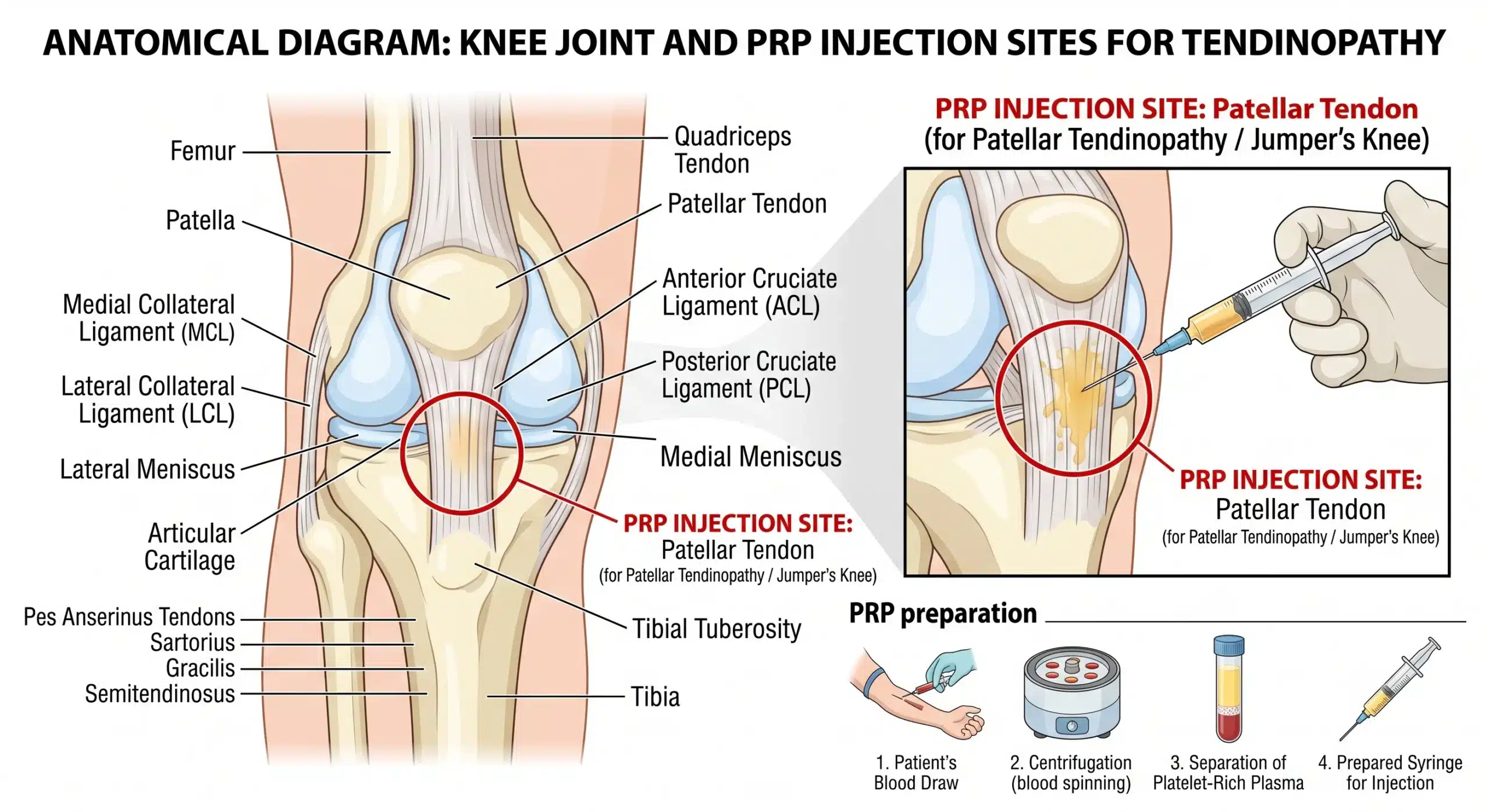
- Blood draw: A small amount of blood is drawn from your arm, similar to a routine lab test.
- Concentration: The blood is placed in a centrifuge that spins it at high speed, separating and concentrating the platelets from other blood components.
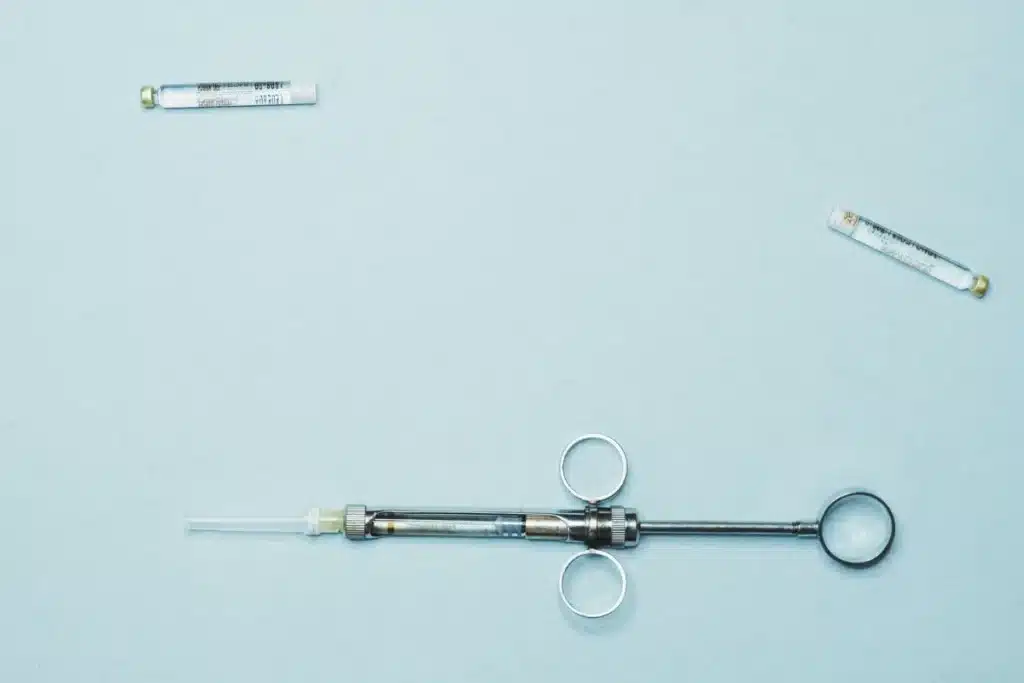
- Injection: The platelet-rich plasma is injected precisely into the injured tendon or joint.
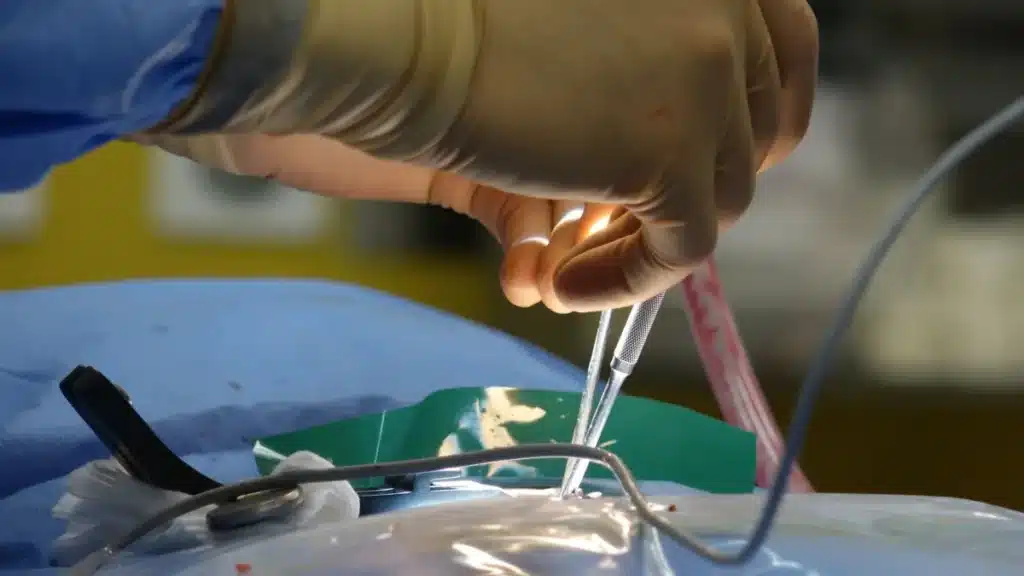
At Spine & Pain Clinic of Texas, Dr. Arif performs PRP injections under precise image guidance to ensure the platelets reach the exact site that needs healing, thereby improving both safety and results. You can learn more about our PRP injection therapy and what to expect.
Which Conditions and Symptoms Can PRP Help?
PRP therapy is most often used for chronic, soft-tissue injuries that have been slow to heal. It may help with:
- Tendon injuries such as tennis elbow, golfer’s elbow, Achilles tendinopathy, and rotator cuff strains
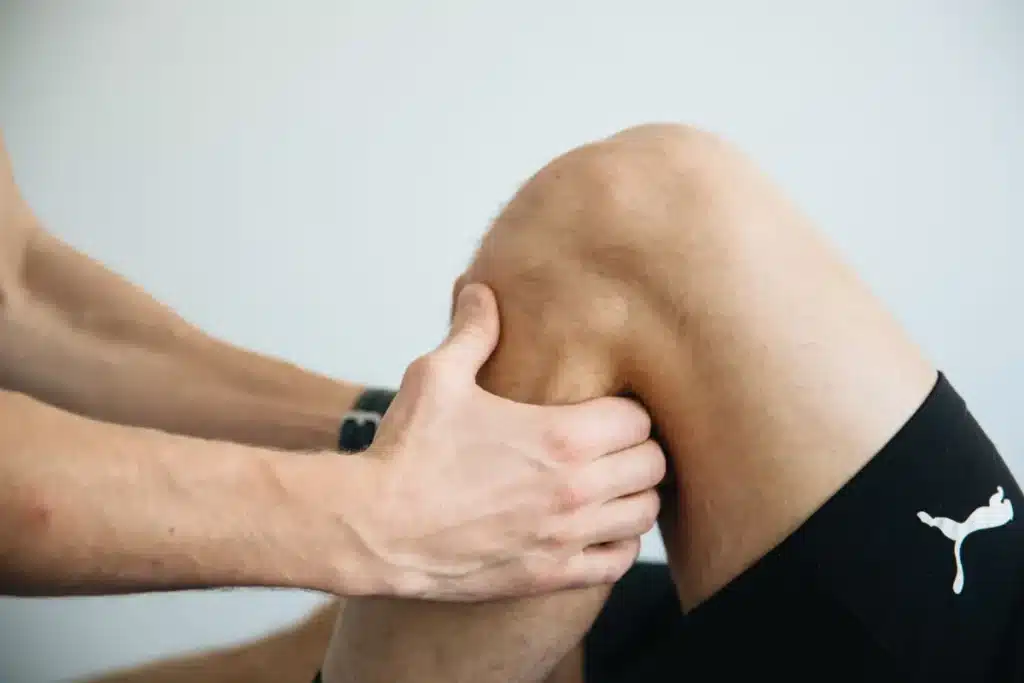
- Joint pain from mild to moderate osteoarthritis, particularly in the knee
- Ligament sprains that haven’t responded to conservative care
- Chronic plantar fasciitis and other persistent overuse injuries
PRP is not a guaranteed cure, and results vary from patient to patient. It tends to work best for early-to-moderate degeneration rather than severe, end-stage joint damage.
Who Is a Good Candidate for PRP Therapy?
You may be a good candidate if you:
- Have tendon or joint pain that hasn’t improved after weeks of conservative treatment
- Want to avoid or delay surgery
- Are in generally good health and able to follow a recovery plan
- Have realistic expectations about gradual, natural healing
PRP may not be appropriate for everyone. Patients with active infections, certain blood disorders, or those on blood-thinning medications may need alternative options. The only way to know for certain is a thorough evaluation with a qualified specialist like Dr. Muhammad Arif, board-certified pain specialist, who can review your imaging, history, and goals.
What Happens Before, During, and After the Procedure?
Before: Your specialist will examine the injured area, review any imaging, and confirm PRP is suitable. You may be advised to pause certain anti-inflammatory medications beforehand, since they can interfere with the healing response.
During: The visit usually takes under an hour. After the blood draw and centrifuge step, the injection itself takes only a few minutes. Most patients tolerate it well, often with the help of a local anesthetic.
After: You can typically go home the same day. Some soreness or swelling at the injection site for a few days is normal—this is part of the healing response, not a complication.
What’s the Recovery Timeline?
PRP works gradually because it relies on your body’s natural repair process. A general timeline looks like this:
- First few days: Mild soreness; rest the treated area.
- 1–2 weeks: Discomfort eases; light activity often resumes.
- 4–6 weeks: Many patients begin noticing improvement.
- 3 months and beyond: Continued healing, with peak benefit often seen over several months.
Some patients benefit from a series of injections. Your specialist will tailor the plan to your specific injury and response.
PRP Therapy vs. Surgery: Weighing the Benefits
For the right candidate, PRP offers several advantages compared to surgical intervention:
- Minimally invasive: No incisions, hospital stay, or general anesthesia
- Uses your own tissue: Very low risk of rejection or allergic reaction
- Shorter downtime: Most people return to daily activities quickly
- Lower complication risk than open surgery
That said, PRP isn’t a replacement for surgery in every case. Severe structural damage—such as a fully torn tendon or advanced arthritis—may still require a surgical solution. A good specialist will be honest with you about which path fits your situation.
Safety and Risks
PRP has a strong safety profile, largely because it uses your own blood. Still, no procedure is completely risk-free. Possible side effects include:
- Temporary pain, swelling, or bruising at the injection site
- A small risk of infection (minimized with a sterile, image-guided technique)
- No guarantee of improvement in every patient
Injecting under image guidance, as our team does, helps reduce risks and improve accuracy.
When Should You See a Specialist?
If tendon or joint pain has lasted more than a few weeks, is interfering with daily life, or keeps returning despite rest and therapy, it’s time for a professional evaluation. Early assessment often leads to better outcomes—and helps you avoid unnecessary surgery.
Our experienced pain management team can determine whether PRP therapy, another minimally invasive option, or a combined approach is right for you.
Take the Next Step Toward Relief
PRP therapy may be the non-surgical path to healing your tendon or joint injury—but the right answer always starts with a personalized evaluation. At Spine & Pain Clinic of Texas, Dr. Arif and our team deliver image-guided, patient-first care designed around your recovery.
We welcome patients across Texas at our conveniently located clinics in Plano, Grand Prairie, Tyler, and Longview.
Ready to find out if PRP therapy is right for you? Contact us today to schedule your consultation.
FAQ Section (Schema-Ready)
Frequently Asked Questions About PRP Therapy
Q: How long does it take for PRP therapy to work?
A: PRP works gradually as your body heals. Many patients notice improvement within 4 to 6 weeks, with peak results developing over several months. Some may need more than one injection for the best outcome.
Q: Is PRP therapy painful?
A: Most patients tolerate the procedure well. You may feel brief discomfort during the injection and mild soreness for a few days afterward, which is a normal part of the healing response. A local anesthetic is often used to improve comfort.
Q: How many PRP injections will I need?
A: It depends on your injury and how your body responds. Some patients improve after a single injection, while others benefit from a short series. Your specialist will create a personalized treatment plan.
Q: Is PRP therapy safe?
A: PRP has a strong safety profile because it uses your own blood, which eliminates the risk of allergic reaction or rejection. Minor risks include temporary swelling, bruising, or soreness at the injection site.
Q: Can PRP therapy help me avoid surgery?
A: For many patients with early-to-moderate tendon or joint injuries, PRP can reduce pain and support healing without surgery. However, severe structural damage may still require a surgical solution. A specialist evaluation is the best way to know your options.