
Chronic back pain from spinal arthritis does not wait for a convenient moment. It shows up when you are trying to sleep, walking through Legacy West, or sitting in traffic on US-75. If medications and physical therapy have given you only partial relief, there is a minimally invasive option worth knowing about: radiofrequency ablation (RFA).
In this guide
What Is Radiofrequency Ablation and How May It Help?
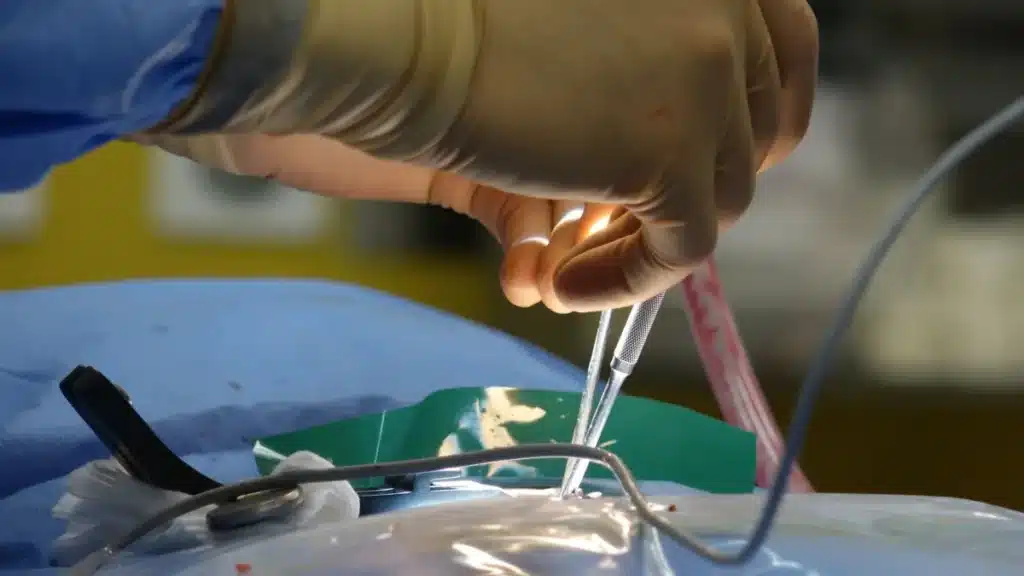
Radiofrequency ablation is a well-established interventional pain management technique. A thin needle-like probe is guided to a specific nerve branch carrying pain signals from an inflamed or arthritic facet joint (the small joint connecting one vertebra to the next). A mild radiofrequency current heats the tissue around that nerve, interrupting its ability to send pain signals to the brain. The Mayo Clinic notes that RFA is commonly used for chronic neck and back pain related to facet joint arthritis, and research from the National Institutes of Health suggests it can provide meaningful pain relief for appropriately selected patients.
Facet joints run the entire length of your spine, from neck to lower back. When degenerative arthritis sets in, these joints become inflamed and stiff, causing that deep, aching pain many people describe as relentless. RFA targets that source directly instead of just masking symptoms with oral medications.

What Happens During the RFA Procedure?
RFA is performed as an outpatient procedure, so most patients go home the same day. Here is what the process typically looks like from your first phone call to follow-up.
Here is what this procedure is designed to offer in plain terms:
- Image-guided precision: fluoroscopy helps the physician place the probe exactly where it is needed at the target nerve branch.
- Outpatient convenience: the procedure typically happens without a hospital stay, and most patients return home the same day.
- Targeted approach: RFA addresses the specific nerve responsible for your facet joint pain rather than relying on broad systemic medication.
- Extended potential relief: many patients report that relief, when it occurs, may last several months to over a year, though individual results vary.
- Minimal downtime: most people can return to light daily activities within a few days, though your provider will give you personalized guidance.
Now Accepting New Patients
Explore RFA for Back Pain Relief in Plano
If arthritis-related back pain is affecting your daily life near Legacy West or along US-75, a consultation with our Plano team may help you understand whether radiofrequency ablation is right for you. Call (469) 915-5222 or visit our Plano location page to request an appointment.
Who May Be a Good Candidate for RFA?
RFA is often considered after conservative treatments have not provided adequate relief. Not every patient with back pain is an ideal candidate, and thorough evaluation is always the starting point.

Good candidates for RFA typically have a confirmed or suspected diagnosis of facet joint arthritis or facet-mediated pain, often in the lumbar (lower back) or cervical (neck) region. Most have tried conservative options such as physical therapy, anti-inflammatory medications, or therapeutic exercises without lasting relief. Critically, they have had a positive response to a diagnostic nerve block, which serves as a meaningful predictor of RFA success.
Who This Procedure May Not Be Right For
RFA is not appropriate for everyone. It is generally not recommended for patients whose pain stems primarily from a herniated disc pressing on a nerve root, from conditions like sciatica caused by nerve compression, or from structural instability that may require surgical evaluation. Patients with certain bleeding disorders, active infections near the planned treatment site, or implanted devices such as some pacemakers may also not be suitable candidates. Your physician will review all of these factors during your consultation.
This table shows how RFA fits into your overall back pain treatment options:
| Treatment Option | Type | Best For | Typical Duration of Effect |
|---|---|---|---|
| Physical therapy | Conservative | Mild to moderate pain, muscle weakness | Ongoing with continued effort |
| Anti-inflammatory medication | Conservative | Short-term flare management | Hours to days per dose |
| Facet joint injection | Interventional | Diagnostic and short-term relief | Weeks to a few months |
| Radiofrequency ablation (RFA) | Minimally invasive | Confirmed facet-mediated pain | Often several months to over a year |
| Spinal surgery | Surgical | Structural instability, severe compression | Variable, condition-dependent |
What to Expect Before, During, and After
Knowing what to expect takes anxiety out of procedure day. Your provider will give you specific instructions, but here is a general picture.
Before the procedure, you may be asked to stop certain blood-thinning medications for a short period, arrange a driver to take you home, and avoid eating or drinking for a few hours beforehand if sedation is planned. The team will review your medications and any allergies with you in advance.
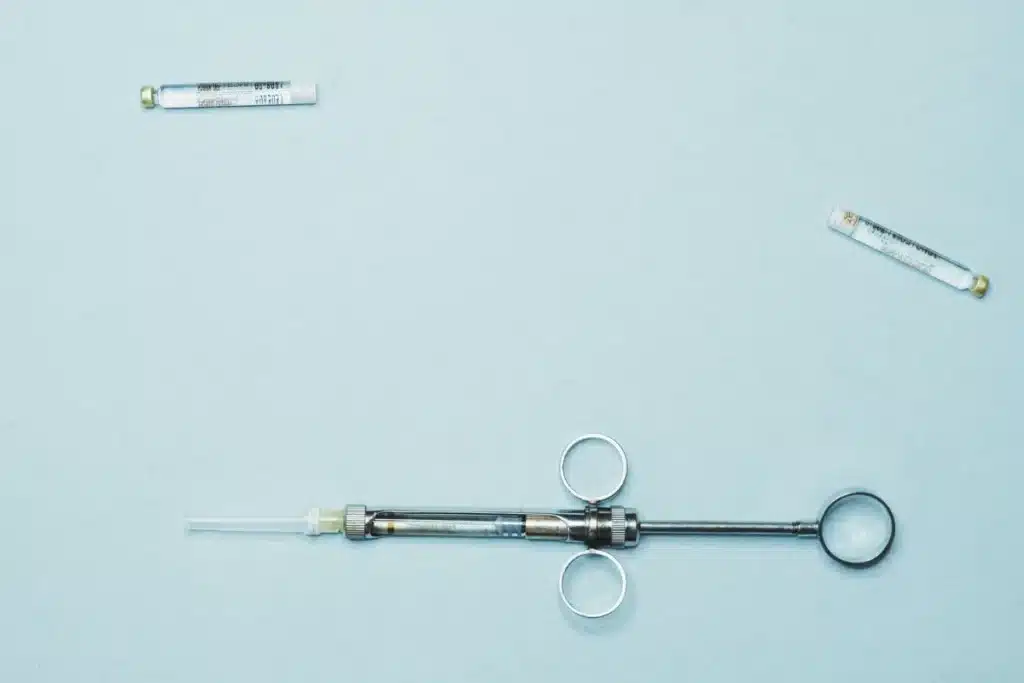
During the procedure, you lie on a padded table in the procedure suite. The skin over the target area is cleaned and numbed with a local anesthetic, a medication that temporarily blocks sensation in a small area. The physician uses fluoroscopy (live X-ray imaging) to guide the probe to the correct location with precision. Most patients feel pressure but report that the procedure is tolerable.

After the procedure, you spend a short time in a recovery area before being discharged. Mild soreness or stiffness at the treated area for a few days is normal. Many patients notice a gradual reduction in baseline pain over two to six weeks as the nerve calms down, though timelines vary. Light walking is usually encouraged; strenuous activity should wait until your provider clears you.
Now Accepting New Patients
Talk to a Plano Pain Specialist About RFA
Wondering whether you might be a candidate for radiofrequency ablation? Dr. Muhammad Arif, MD and the Plano team are available to review your history and imaging and walk you through your options. Reach us at (469) 915-5222 to schedule your consultation.
Building Your Overall Pain Management Plan
Chronic back pain from spinal arthritis rarely has a single solution. The most effective care plans layer several approaches together. Many people living with long-term pain are now seeking better options beyond traditional medication alone.
Recent reporting from UCLA Health highlights the expanding toolkit available for chronic pain management, and the range of evidence-based strategies, including nerve-targeted procedures, mirrors what interventional specialists use for spinal pain. Research suggests that integrating multiple approaches, from targeted procedures like RFA to supportive therapies, tends to produce better outcomes than any single treatment alone. Of course, every patient’s situation is different, and a specialist evaluation is always the right first step.
At Spine and Pain Clinic of Texas, the approach to back pain care goes beyond a single procedure. Depending on your evaluation, the team may discuss complementary options such as epidural steroid injections (anti-inflammatory medication delivered near the spinal nerves), regenerative medicine approaches including platelet-rich plasma (PRP), or other minimally invasive procedures suited to your specific diagnosis.

Meeting Dr. Muhammad Arif, MD in Plano, TX
Dr. Muhammad Arif, MD is an interventional pain management specialist serving patients at all four Spine and Pain Clinic of Texas locations, including the Plano clinic. He works with patients experiencing a wide range of chronic pain conditions and tailors evaluation and treatment planning to each person’s specific goals and history. If you have been searching for a pain specialist in Texas who takes a thorough, procedure-based approach to spine and joint pain, a consultation with Dr. Arif is a practical next step.
Patients from across the north Dallas area come to the Plano clinic because of its convenient location and access to major roads. Whether you travel along the Dallas North Tollway, head across the President George Bush Turnpike from Wylie or Murphy, or come down from Frisco and Allen, the clinic serves communities throughout the region. You can also find dedicated resources for patients in Frisco, Allen, McKinney, Richardson, Carrollton, The Colony, and Murphy through the clinic’s dedicated location pages.
Taking the Next Step Toward Relief
Living with arthritis-related back pain is genuinely exhausting, and you do not have to keep managing it alone with over-the-counter medications and rest. Radiofrequency ablation in Plano, TX is a well-established, minimally invasive option that may help reduce chronic spinal pain for the right candidates. The first step is simply a conversation with a specialist who can review your specific situation.
The Spine and Pain Clinic of Texas in Plano is conveniently located just minutes from the Dallas North Tollway and serves patients from Frisco, Allen, McKinney, Richardson, Carrollton, The Colony, Murphy, Wylie, North Dallas, and surrounding communities. The clinic typically offers consultation appointments to new patients, and the team can help you understand your options, verify your insurance benefits, and build a care plan suited to your goals.
Call (469) 915-5222 to speak with the Plano team, or visit the location page to request an appointment online. The same specialized care is also available at the clinic’s other Texas locations: Grand Prairie, TX at (469) 680-3886, and both Longview, TX and Tyler, TX at (214) 256-3900.
Now Accepting New Patients
Ready to Discuss Spine Pain Care in Plano?
The Spine and Pain Clinic of Texas in Plano, TX welcomes patients from Frisco, Allen, McKinney, Richardson, and surrounding communities. Contact us at (469) 915-5222 or visit our Plano location page to take the next step toward managing your back pain.
This article is for educational purposes only and is not a substitute for professional medical advice, diagnosis, or treatment. Always consult a qualified healthcare provider about your specific condition. If you experience severe or sudden symptoms, seek emergency care immediately.